- —— CARE & AWARENESS
- AVYRA EDITORIAL
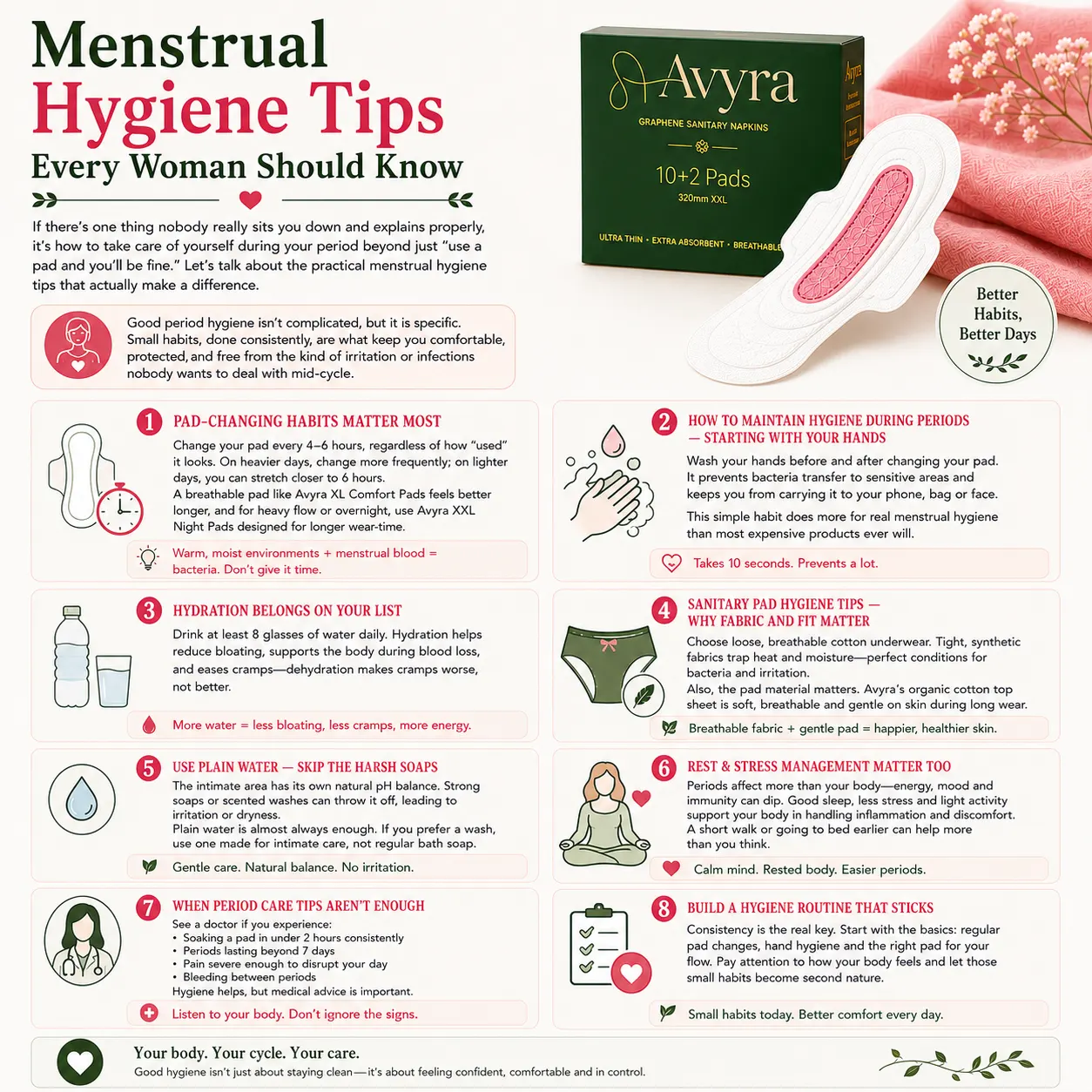
Menstrual Hygiene Tips Every Woman Should Know
How to Maintain Hygiene During Periods — Starting With Your Hands
If there’s one thing nobody really sits you down and explains properly, it’s how to take care of yourself during your period beyond just “use a pad and you’ll be fine.” Most of us figured it out through trial and error and a lot of guessing. So let’s talk about it properly — the kind of practical menstrual hygiene tips that actually make a difference, not the vague advice you’ve probably heard a hundred times already.
Good period hygiene isn’t complicated, but it is specific. Small habits, done consistently, are what keep you comfortable, protected, and free from the kind of irritation or infections nobody wants to deal with mid-cycle.
- —— HABIT 01 ——
Period Hygiene Tips That Start With Pad-Changing Habits
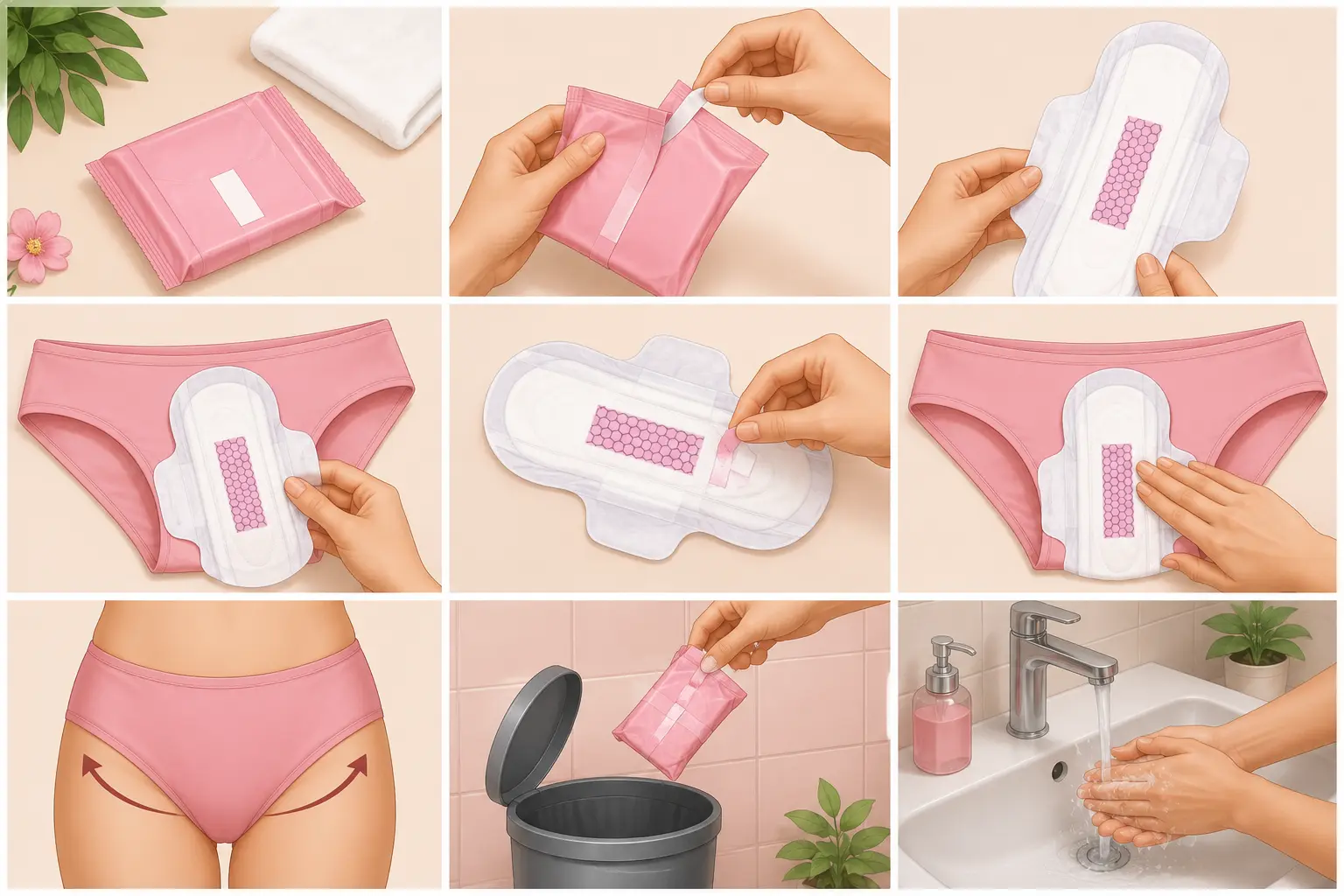
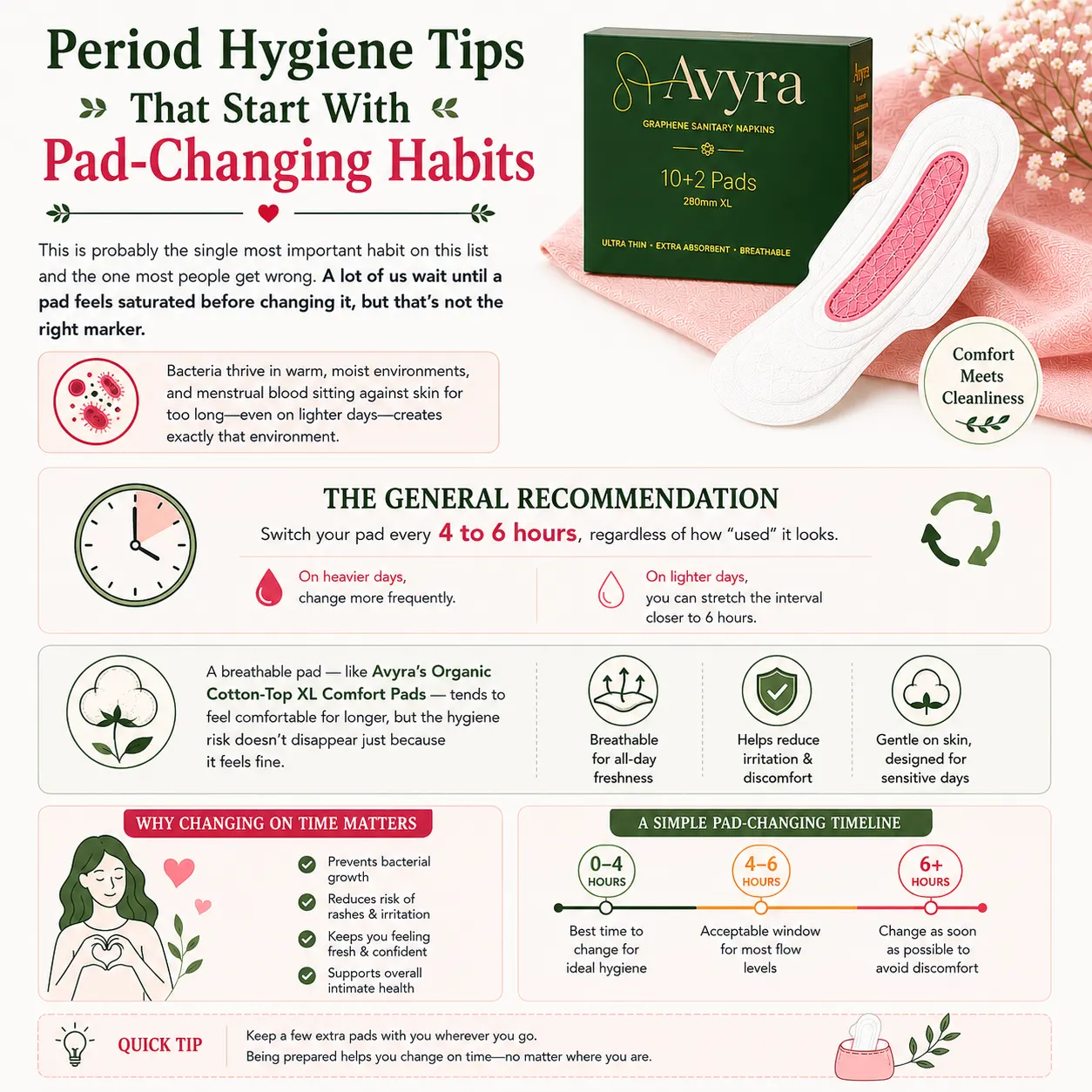
This is probably the single most important habit on this list and the one most people get wrong. A lot of us wait until a pad feels saturated before changing it, but that’s not the right marker. Bacteria thrive in warm, moist environments, and menstrual blood sitting against skin for too long—even on lighter days—creates exactly that environment.
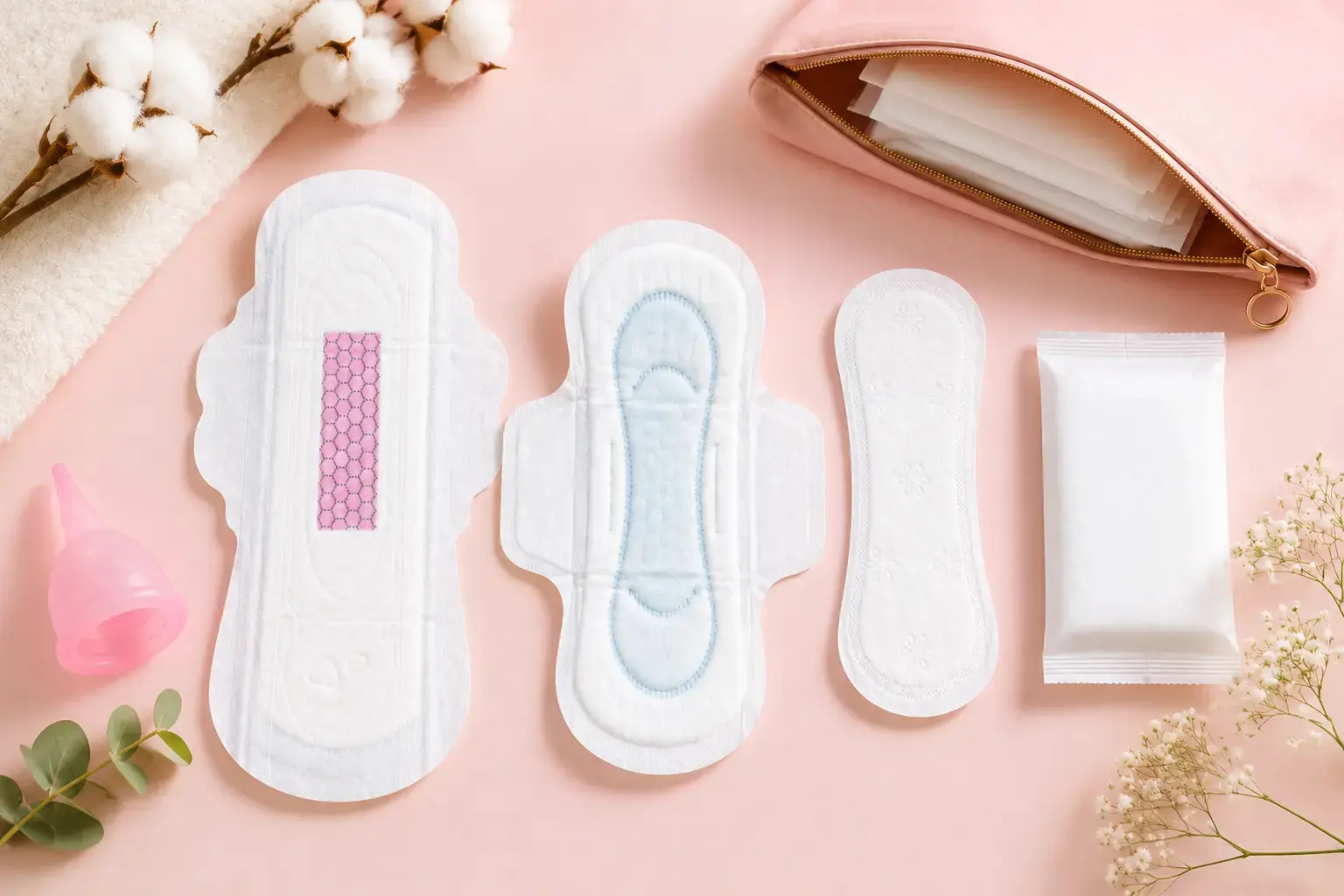
The general recommendation is to switch every 4 to 6 hours, regardless of how “used” the pad looks. On heavier days, you should change pads more frequently; on lighter days, it is acceptable to stretch the interval closer to the 6-hour mark. A breathable pad — like Avyra’s Organic Cotton-Top XL Comfort Pads — tends to feel comfortable for longer, but the hygiene risk doesn’t disappear just because it feels fine.
- —— HABIT 02 ——
How to Maintain Hygiene During Periods — Starting With Your Hands
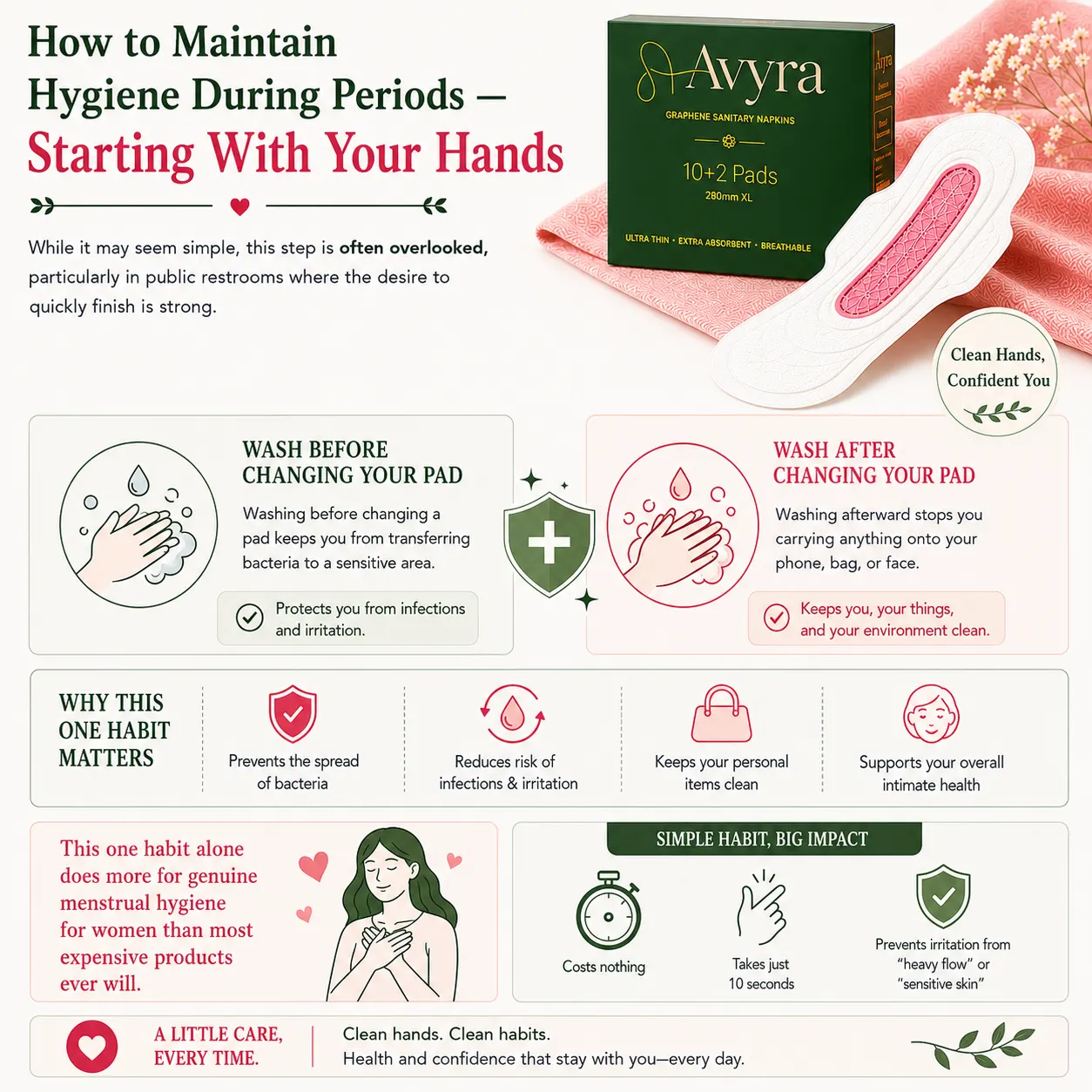
While it may seem simple, this step is often overlooked, particularly in public restrooms where the desire to quickly finish is strong. Washing before changing a pad keeps you from transferring bacteria to a sensitive area, and washing afterward stops you carrying anything onto your phone, bag, or face.
This one habit alone does more for genuine menstrual hygiene for women than most expensive products ever will. It costs nothing, takes ten seconds, and prevents a lot of the irritation people end up blaming on “heavy flow” or “sensitive skin.”
- —— HABIT 03 ——
Why Hydration Belongs on Your List of Period Hygiene Tips
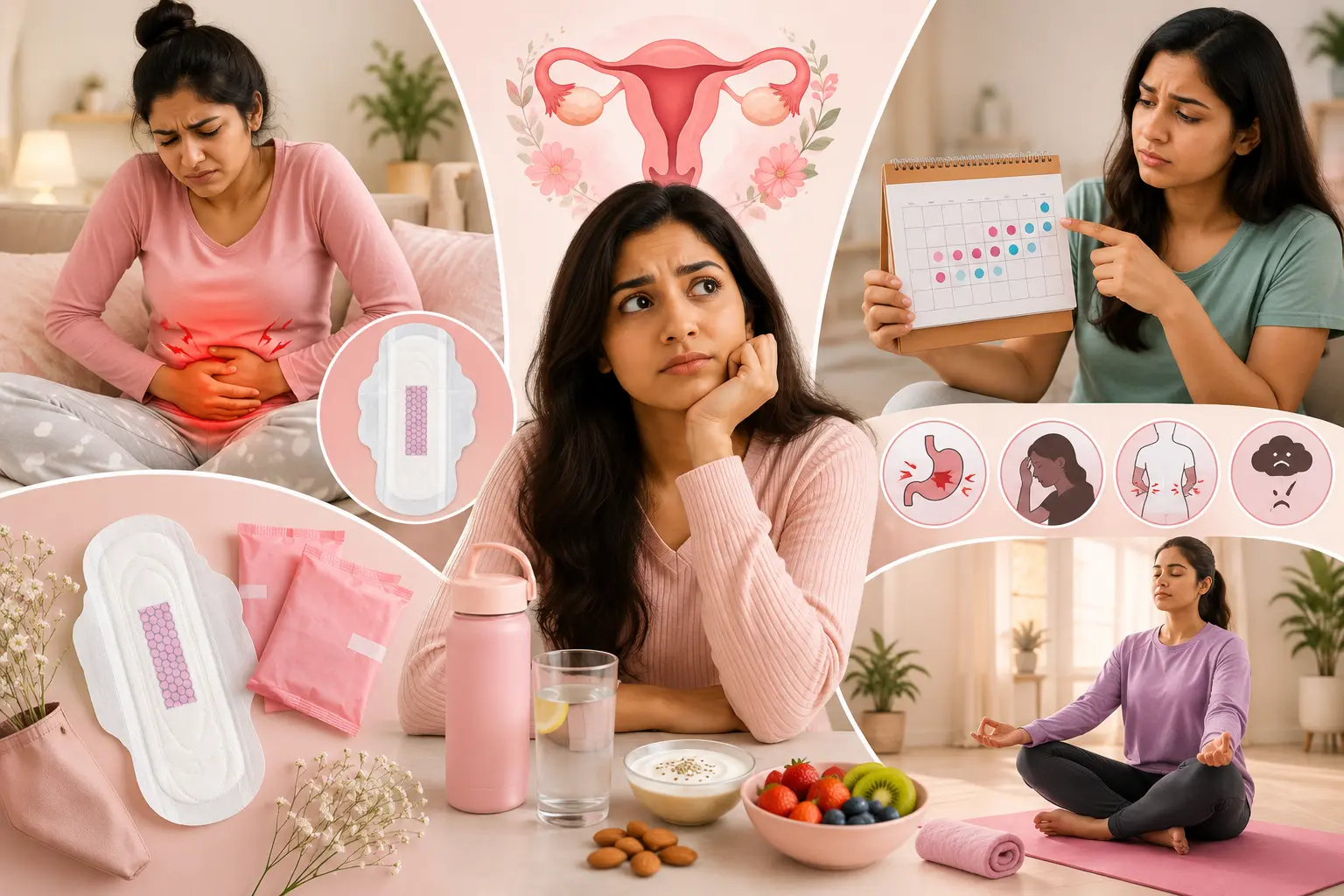
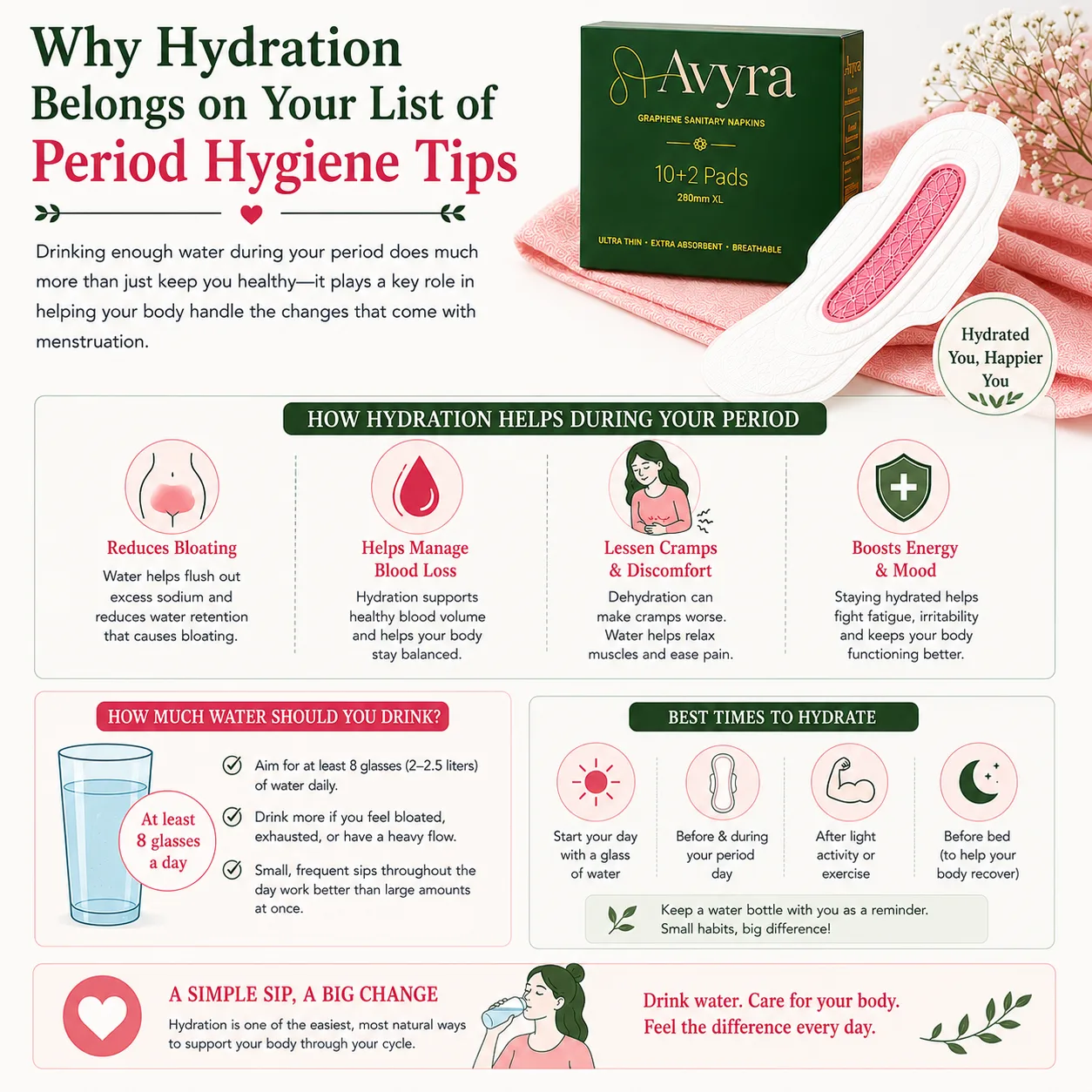
Consuming sufficient water during menstruation is important not only for maintaining good health but also has its particular role as well. Hydration can help reduce bloating, cope with the effects of blood loss, and lessen cramps because dehydration makes cramps worse rather than better. Try to drink at least 8 glasses of water daily, even more if you have bloating or feel exhausted during menstruation.
- —— HABIT 04 ——
Sanitary Pad Hygiene Tips — Why Fabric and Fit Matter
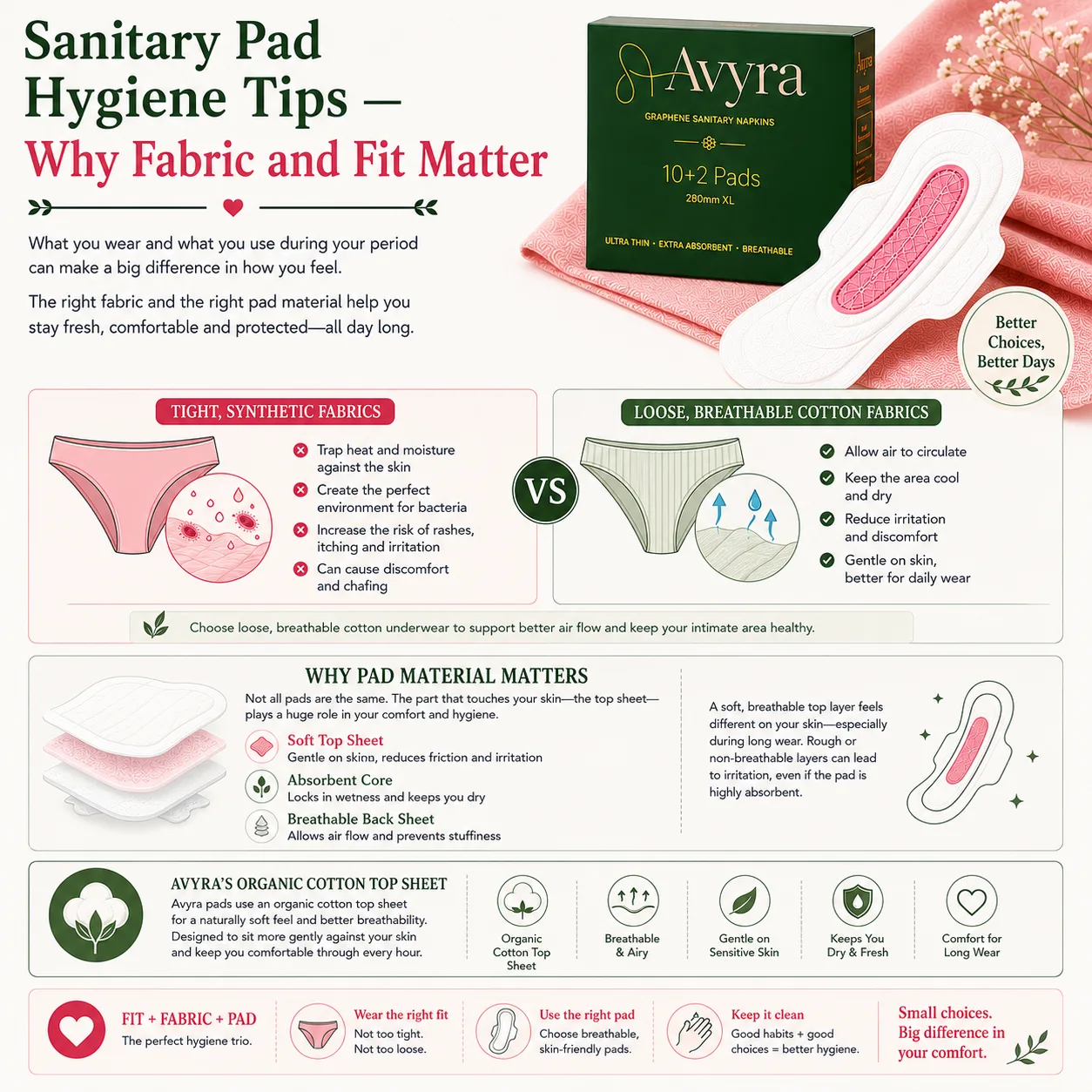
Tight, synthetic fabrics trap heat and moisture against the skin—the same environment that lets bacteria thrive. Loose, breathable cotton underwear lets air circulate, reducing both discomfort and irritation risk.
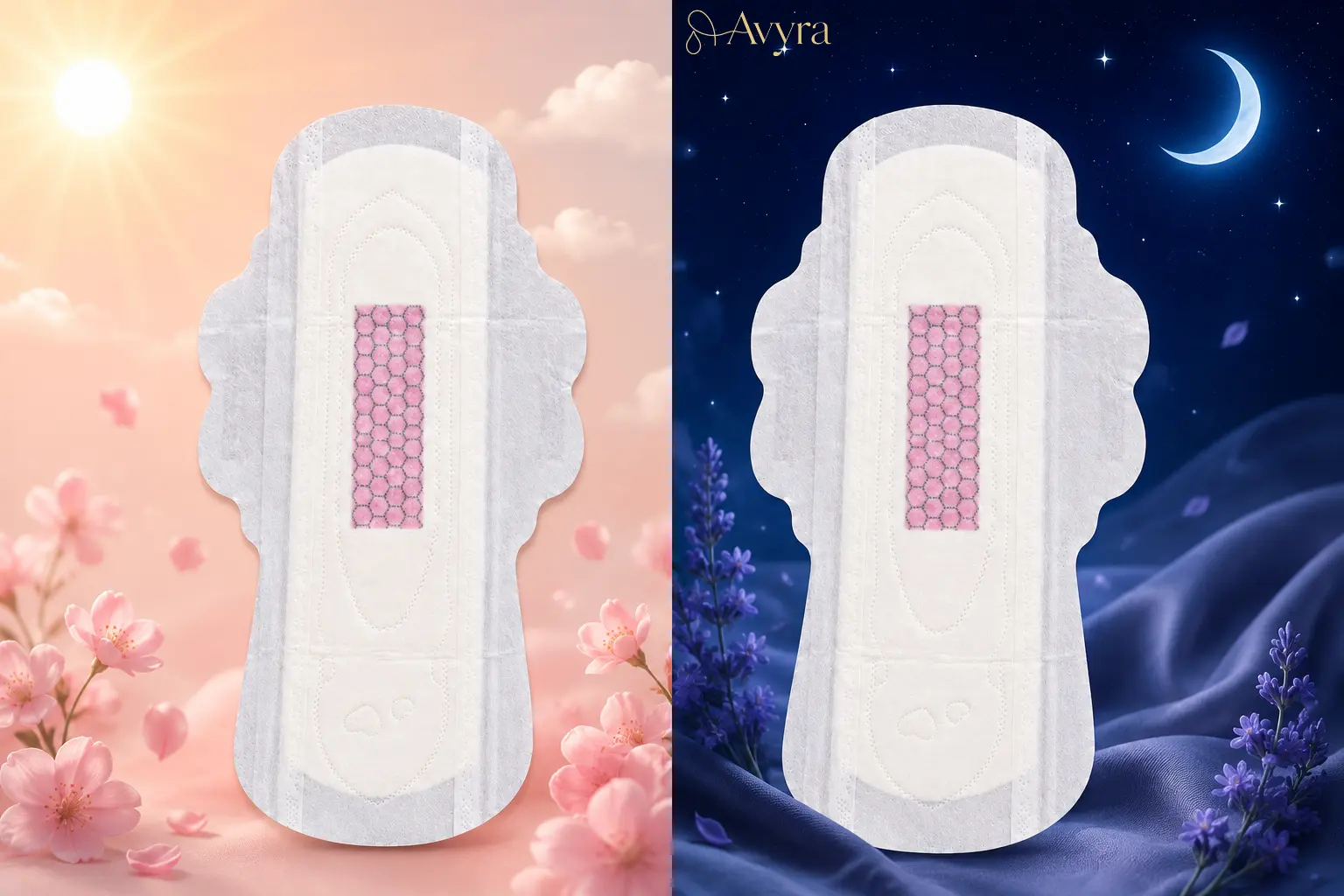
This is also why the material of your pad matters, not just the brand on the packet. A soft, breathable top layer behaves very differently against skin over several hours than a rougher one. Avyra’s pads use an organic cotton top sheet for this reason, designed to sit more gently against skin during long wear.
Use Plain Water — Skip the Harsh Soaps
The skin in this area has its own natural pH balance, and strong soaps or scented washes can throw that off, leading to irritation or dryness — ironically, the very thing you're trying to avoid. Plain water is almost always enough. If you prefer a wash, choose one made specifically for intimate use, not regular bath soap.
Rest and Stress Management Are Part of Menstrual Hygiene Too
Periods affect more than your body — energy, mood, and immune response can all dip. Getting enough sleep and managing stress genuinely supports how your body handles inflammation and discomfort during your cycle. If cramps feel worse during a stressful week, that's not a coincidence. Going to bed a little earlier or taking a short walk can help more than people expect.
When Period Care Tips Aren't Enough — Signs to See a Doctor
Most period discomfort is normal, but some signs genuinely warrant a doctor's visit rather than pushing through – soaking a pad in under two hours consistently, periods lasting beyond seven days, pain severe enough to disrupt your day, or bleeding between periods. Hygiene habits matter, but they're not a substitute for medical advice when something feels off. You can find a fuller breakdown of these warning signs on our Care & Awareness page.
Building a Hygiene Routine That Actually Sticks
None of these tips work as one-time fixes — they work through consistency, cycle after cycle, until they become second nature. Start with the basics: regular pad changes, proper hand hygiene, and a pad comfortable enough to wear for hours without irritation. The rest tends to follow once you're paying attention to how your body feels through the month.
- —— FAQ's ——