- —— CARE & AWARENESS
- AVYRA EDITORIAL
Day vs Night Pads: Understanding the Difference
The Difference Between Day and Night Pads, Explained Simply
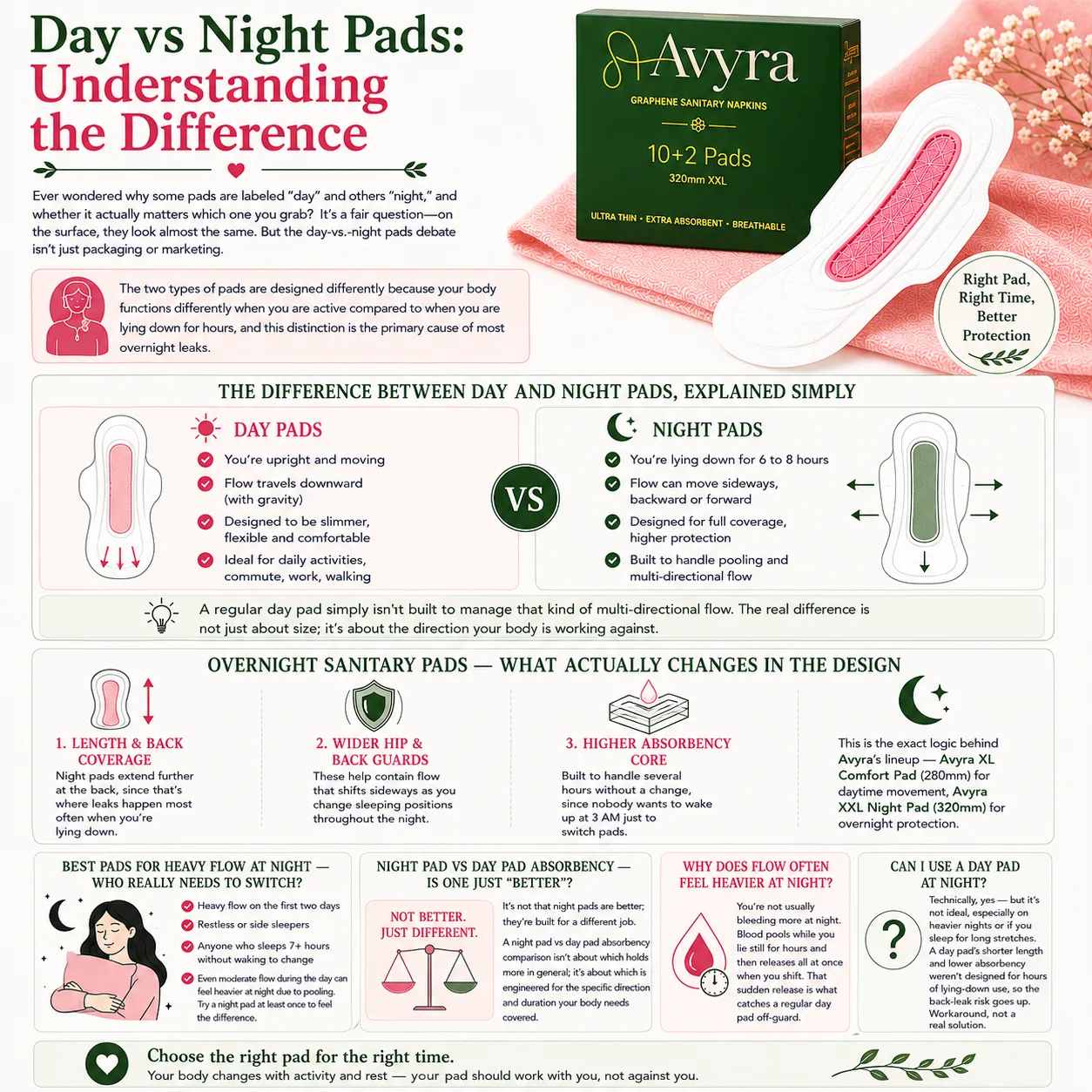
Ever wondered why some pads are labeled “day” and others “night,” and whether it actually matters which one you grab? It’s a fair question—on the surface, they look almost the same. But the day-vs-night pads debate isn’t just packaging or marketing.
The two types of pads are designed differently because your body functions differently when you are active compared to when you are lying down for hours, and this distinction is the primary cause of most overnight leaks.
- —— HABIT 01 ——
The Difference Between Day and Night Pads, Explained Simply
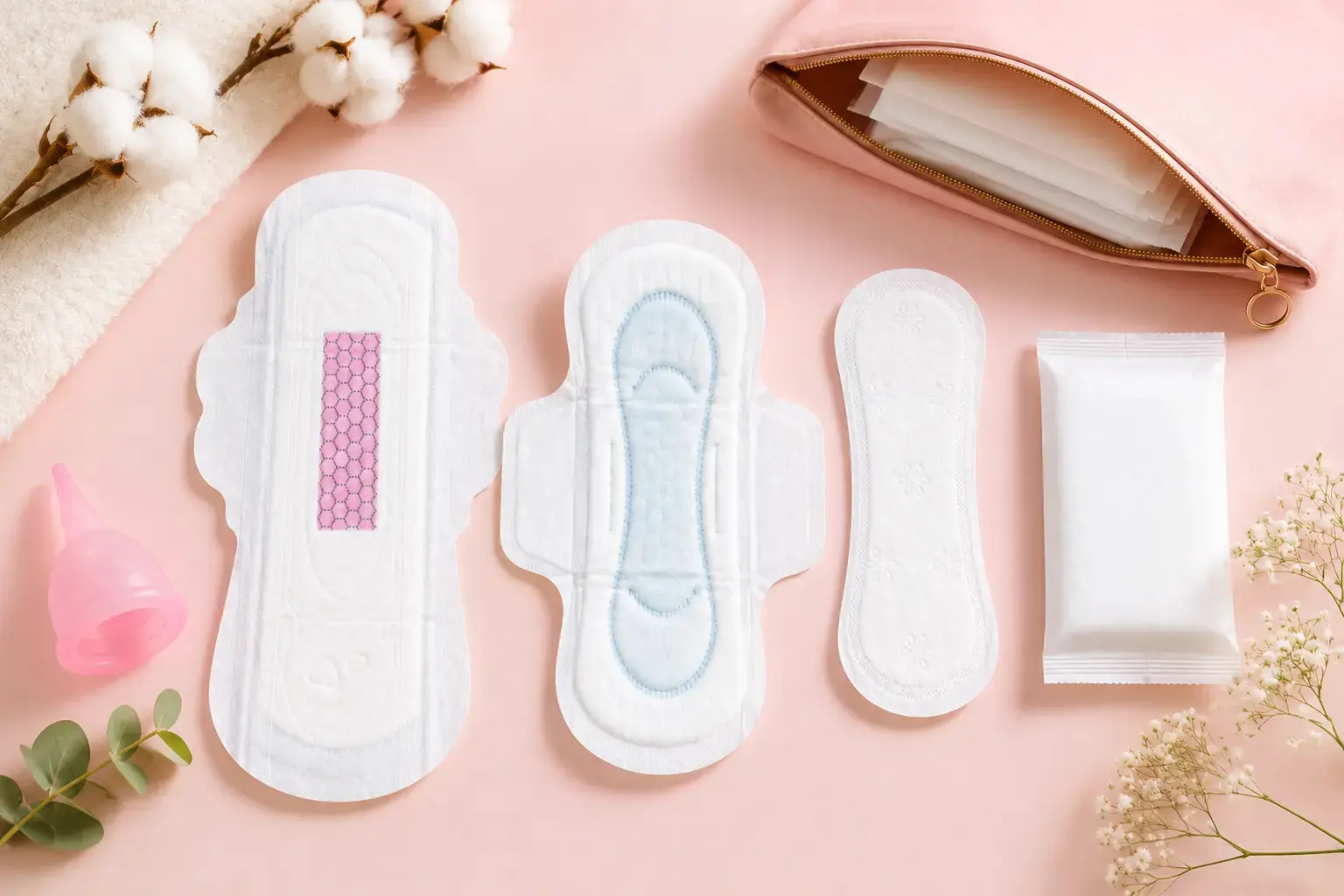
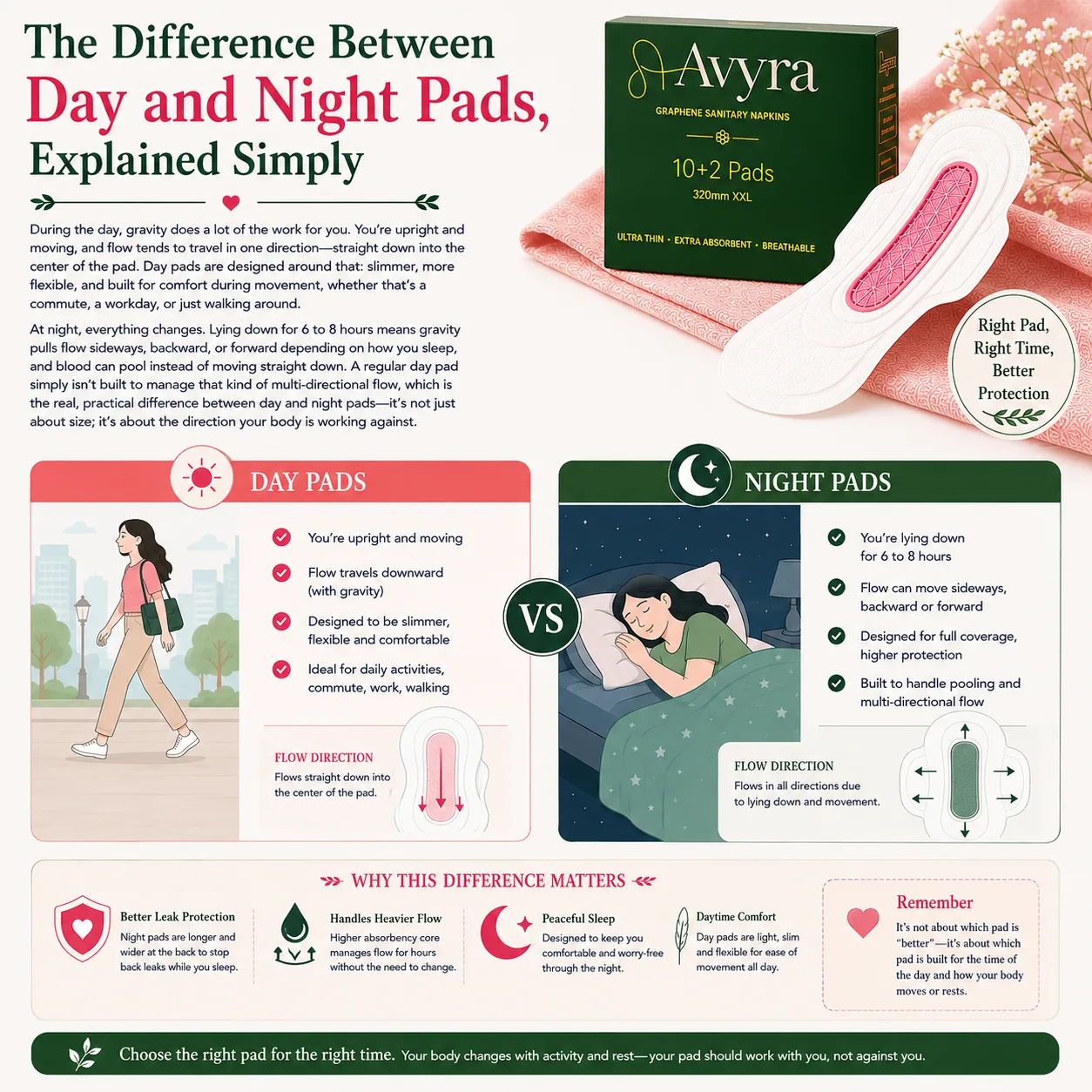
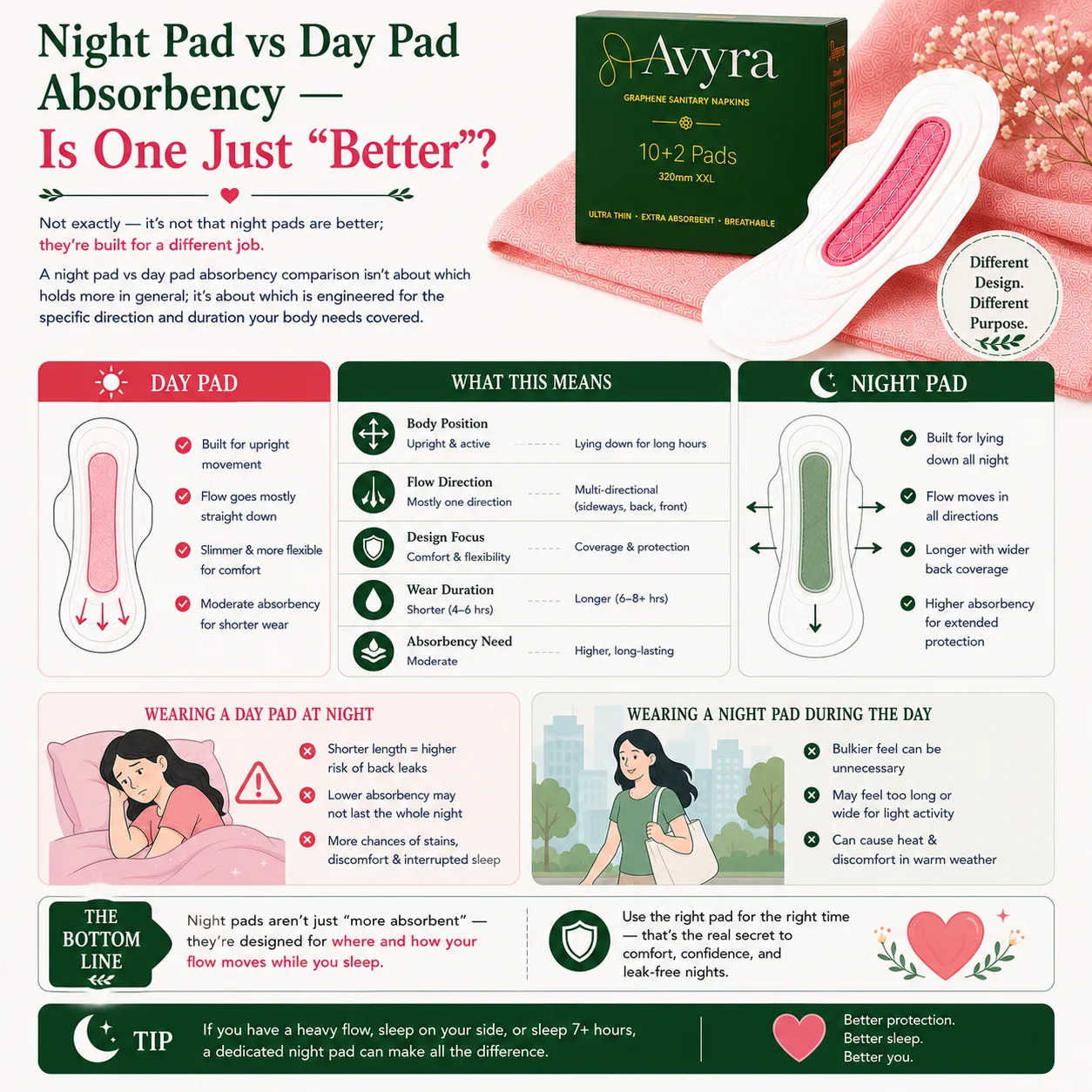
During the day, gravity does a lot of the work for you. You’re upright and moving, and flow tends to travel in one direction—straight down into the center of the pad. Day pads are designed around that: slimmer, more flexible, and built for comfort during movement, whether that’s a commute, a workday, or just walking around.
At night, everything changes. Lying down for 6 to 8 hours means gravity pulls flow sideways, backward, or forward depending on how you sleep, and blood can pool instead of moving straight down. A regular day pad simply isn’t built to manage that kind of multi-directional flow, which is the real, practical difference between day and night pads—it’s not just about size; it’s about the direction your body is working against.
- —— HABIT 02 ——
Overnight Sanitary Pads — What Actually Changes in the Design
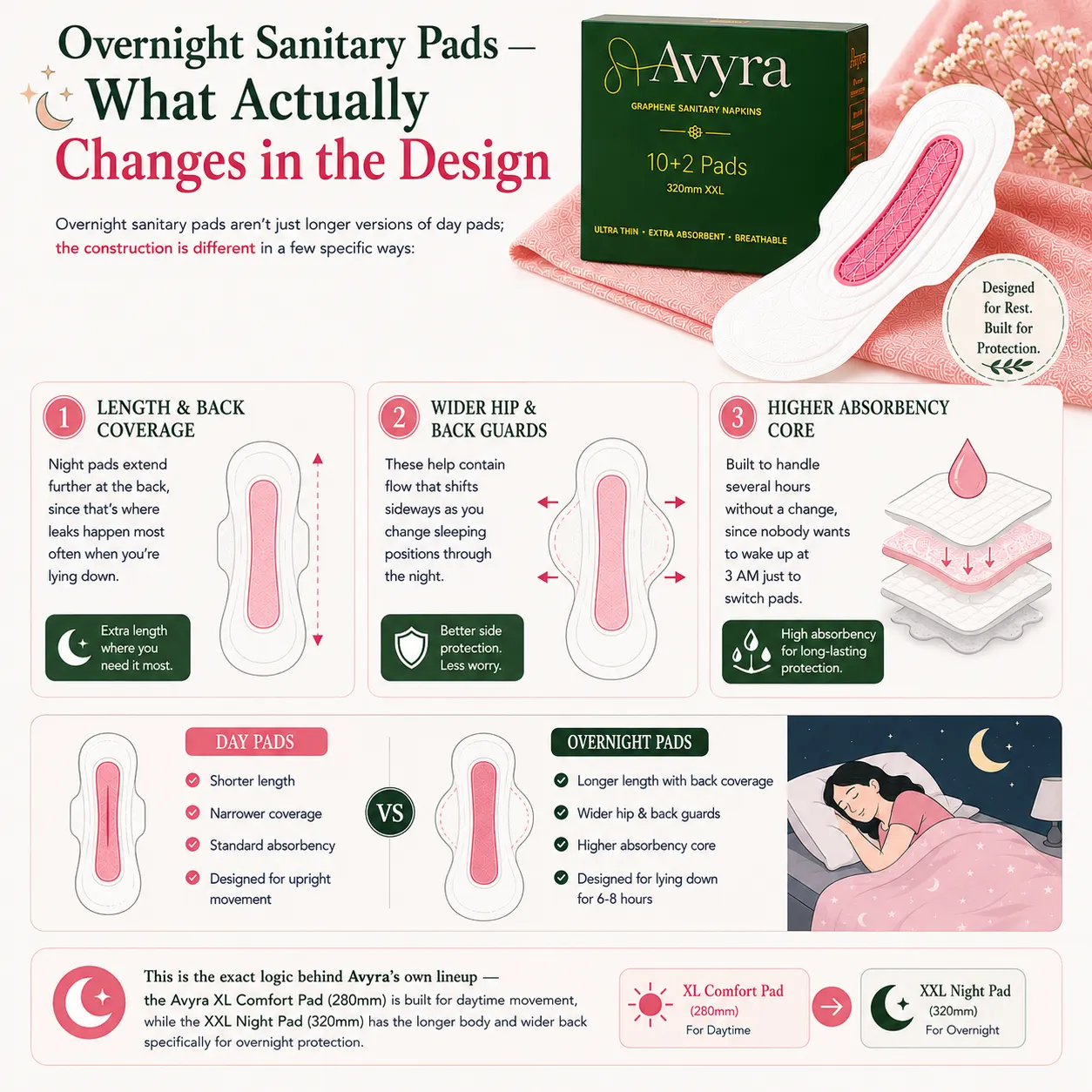
Overnight sanitary pads aren’t just longer versions of day pads; the construction is different in a few specific ways:
- Length and back coverage: Night pads extend further at the back, since that’s where leaks happen most often when you’re lying down.
- Wider hip and back guards: These help contain flow that shifts sideways as you change sleeping positions through the night.
- Higher absorbency core: Built to handle several hours without a change, since nobody wants to wake up at 3 AM just to switch pads.
- —— HABIT 03 ——
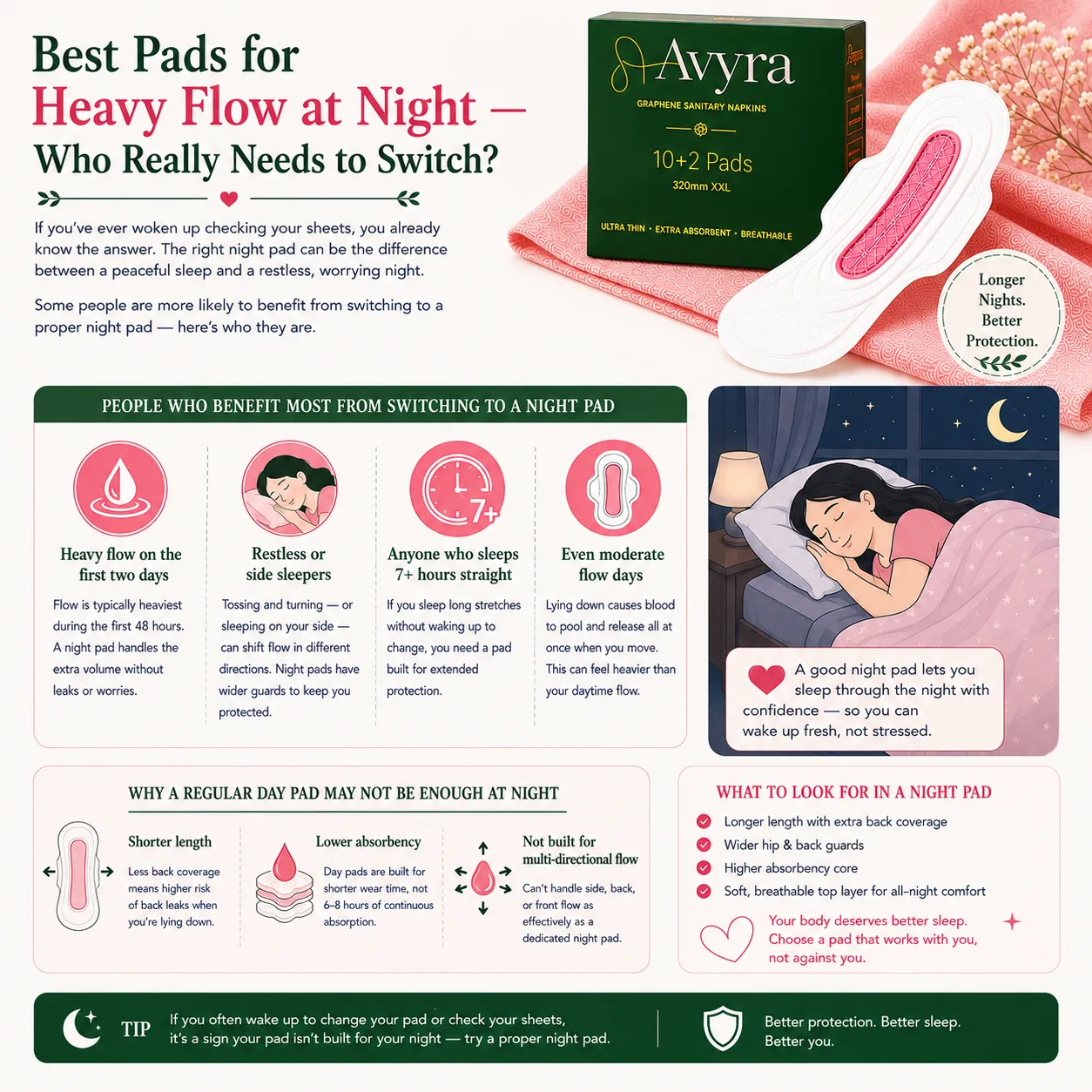
Best Pads for Heavy Flow at Night — Who Really Needs to Switch?
- —— HABIT 04 ——
Night Pad vs Day Pad Absorbency — Is One Just "Better"?
Not exactly — it’s not that night pads are better; they’re built for a different job. A night pad vs day pad absorbency comparison isn’t about which holds more in general; it’s about which is engineered for the specific direction and duration your body needs covered. Wearing a night pad all day can feel bulky and unnecessary for light daytime activity, while wearing a day pad overnight on a heavier flow night significantly increases your leak risk.
Why Does Flow Often
Feel Heavier at Night?
You're not usually bleeding more at night; blood pools while you lie still for hours and then releases all at once when you shift. That sudden release is what catches a regular day pad off-guard.
Can I Use a
Day Pad at Night?
Technically, yes — but it's not ideal, especially on heavier nights or if you sleep for long stretches. A day pad's shorter length and lower absorbency weren't designed for hours of lying-down use, so the back-leak risk goes up. If your flow is genuinely light and you sleep on your back without much movement, you might get away with it occasionally — but it's a workaround, not a real solution.
- —— FAQ's ——