- —— CARE & AWARENESS
- AVYRA EDITORIAL
Foods That Help During Periods: What to Eat for a Comfortable Cycle
Iron-Rich Foods: Replacing What Your Body Is Losing
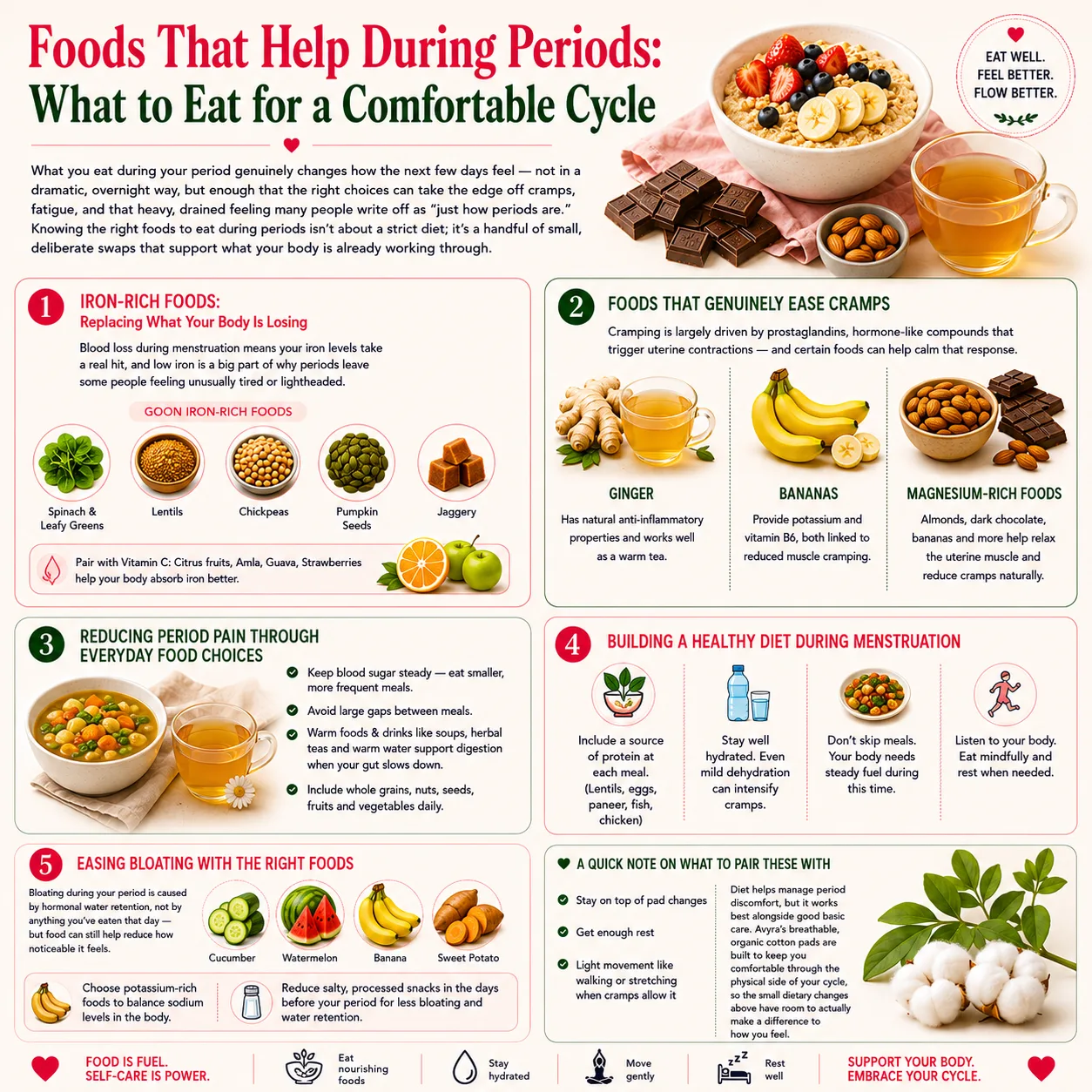
What you eat during your period genuinely changes how the next few days feel — not in a dramatic, overnight way, but enough that the right choices can take the edge off cramps, fatigue, and that heavy, drained feeling many people write off as “just how periods are.” Knowing the right foods to eat during periods isn’t about a strict diet; it’s a handful of small, deliberate swaps that support what your body is already working through.
- —— HABIT 01 ——
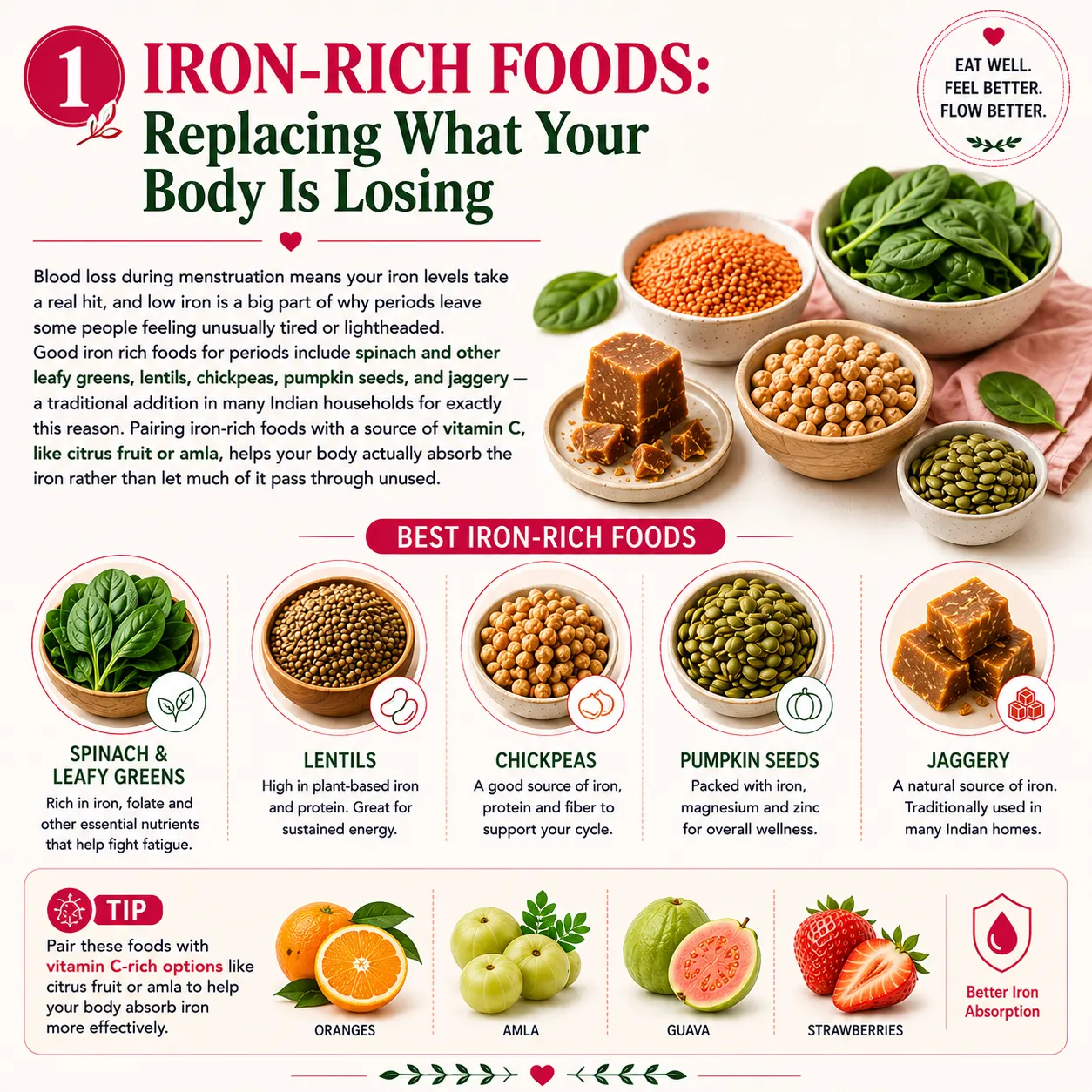
Iron-Rich Foods: Replacing What Your Body Is Losing
Blood loss during menstruation means your iron levels take a real hit, and low iron is a big part of why periods leave some people feeling unusually tired or lightheaded. Good iron rich foods for periods include spinach and other leafy greens, lentils, chickpeas, pumpkin seeds, and jaggery — a traditional addition in many Indian households for exactly this reason. Pairing iron-rich foods with a source of vitamin C, like citrus fruit or amla, helps your body actually absorb the iron rather than let much of it pass through unused.
- —— HABIT 02 ——
Building a Healthy Diet During Menstruation
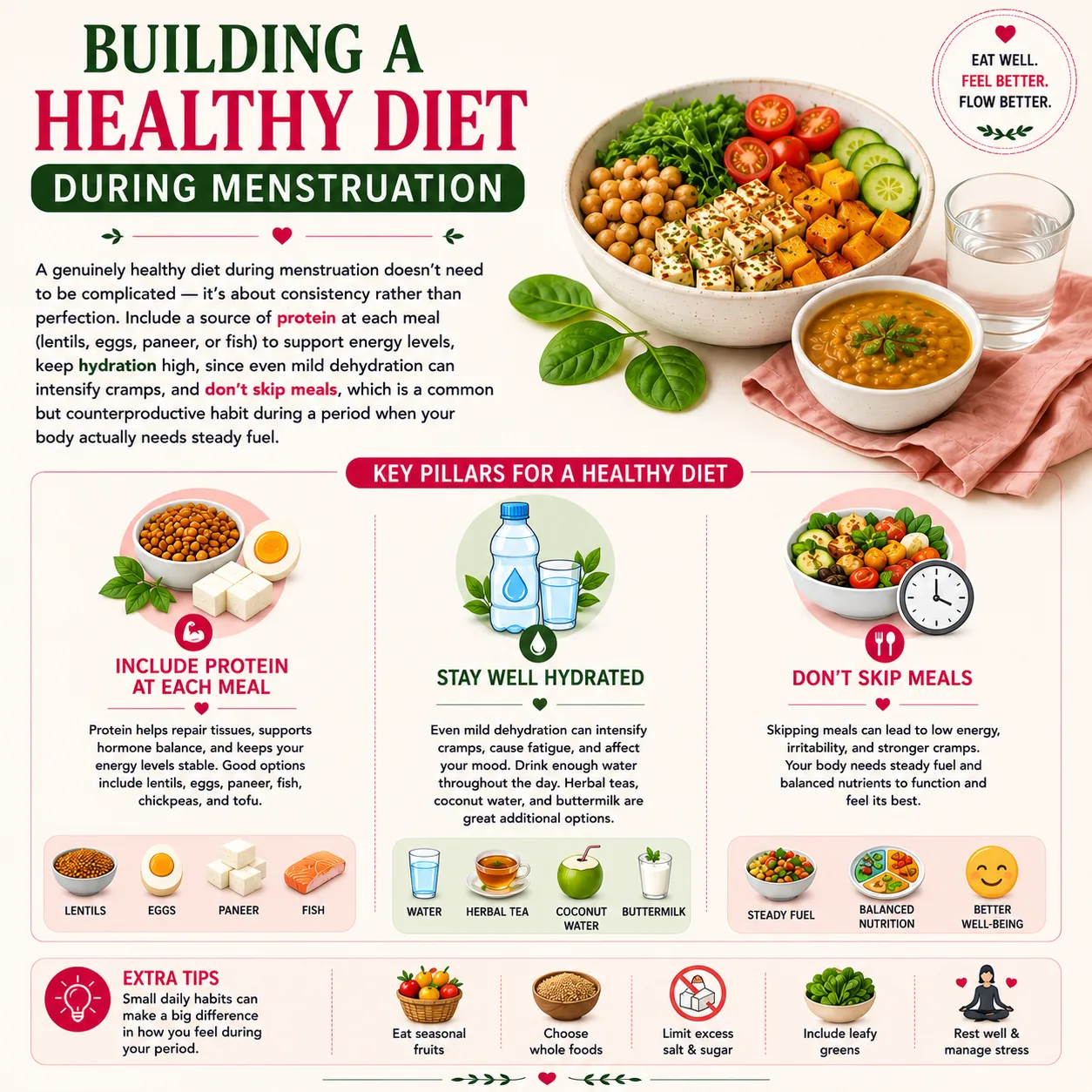
A genuinely healthy diet during menstruation doesn’t need to be complicated — it’s about consistency rather than perfection. Include a source of protein at each meal (lentils, eggs, paneer, or fish) to support energy levels, keep hydration high, since even mild dehydration can intensify cramps, and don’t skip meals, which is a common but counterproductive habit during a period when your body actually needs steady fuel.
- —— HABIT 03 ——
Easing Bloating With the Right Foods
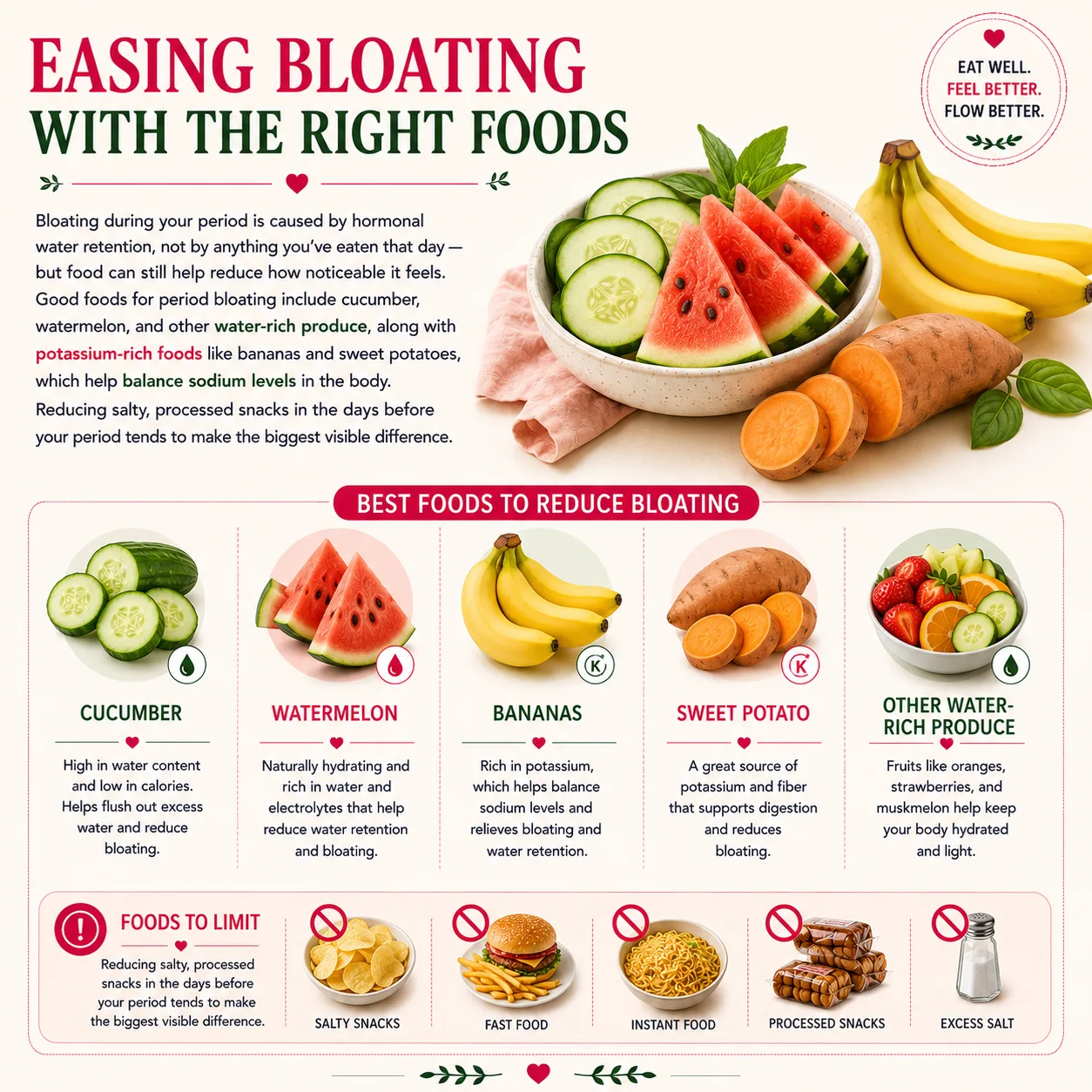
Bloating during your period is caused by hormonal water retention, not by anything you’ve eaten that day — but food can still help reduce how noticeable it feels. Good foods for period bloating include cucumber, watermelon, and other water-rich produce, along with potassium-rich foods like bananas and sweet potatoes, which help balance sodium levels in the body. Reducing salty, processed snacks in the days before your period tends to make the biggest visible difference.
- —— HABIT 04 ——
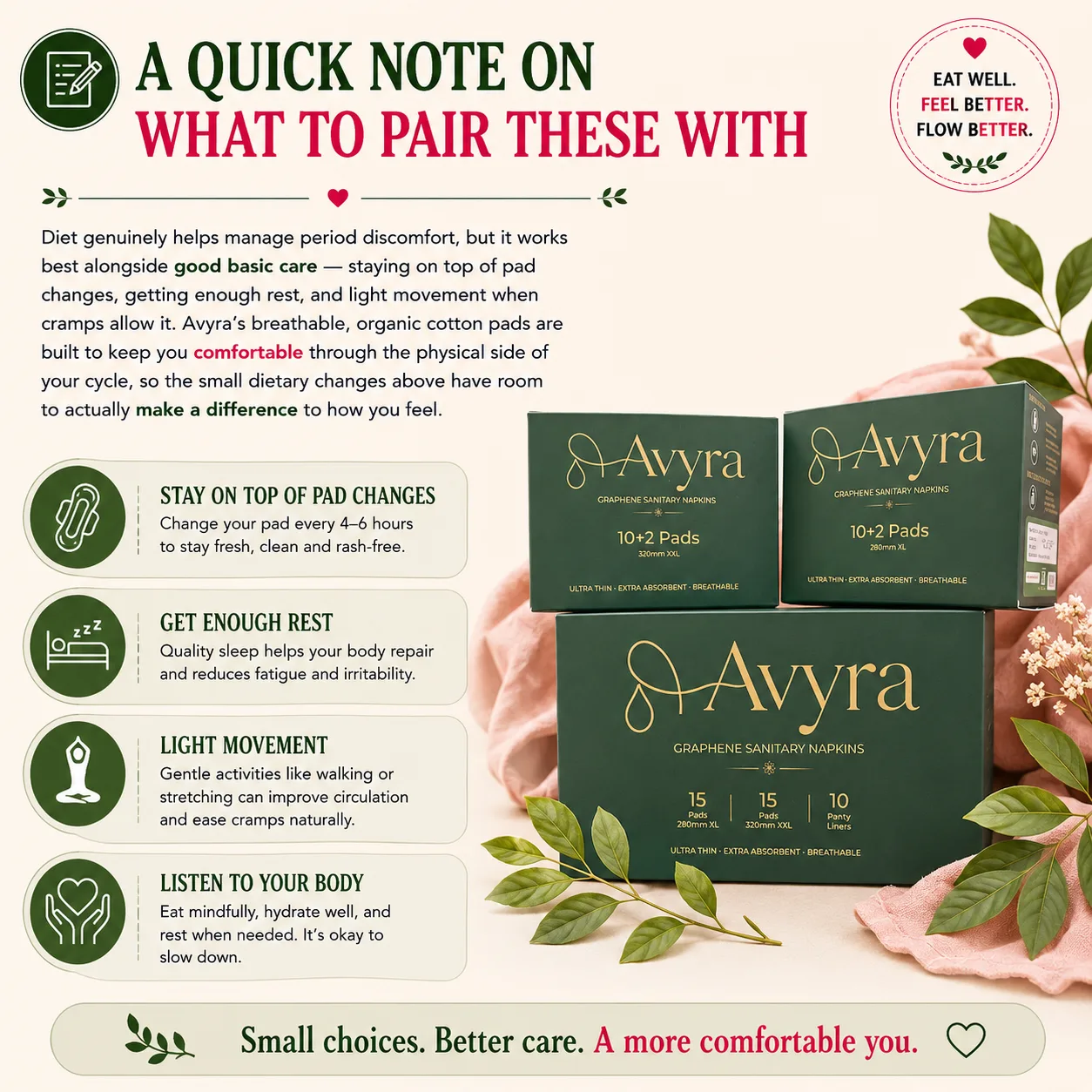
A Quick Note on What to Pair These With
Foods That Genuinely
Ease Cramps
Cramping is largely driven by prostaglandins, hormone-like compounds that trigger uterine contractions — and certain foods can help calm that response. Among the best foods for period cramps, ginger stands out; it has natural anti-inflammatory properties and works well as a warm tea. Bananas provide potassium and vitamin B6, both linked to reduced muscle cramping, while foods rich in magnesium — think almonds, dark chocolate, and bananas again — help relax the uterine muscle itself rather than just masking the discomfort.
Reducing Period Pain Through
Everyday Food Choices
Beyond individual "hero" ingredients, the bigger shift is in overall eating pattern. If you're looking for practical ways of reducing period pain naturally through food, the most consistent advice is to keep blood sugar steady — smaller, more frequent meals rather than large gaps followed by heavy ones — since sharp blood sugar swings can worsen both cramping and mood. Warm foods and drinks, like soups, herbal teas, and warm water in general, also support digestion during a phase when your gut tends to slow down slightly.
- —— FAQ's ——