- —— CARE & AWARENESS
- AVYRA EDITORIAL
How to Use a Sanitary Pad - A Step-by-Step Guide for Beginners
First, Know What You're Working With
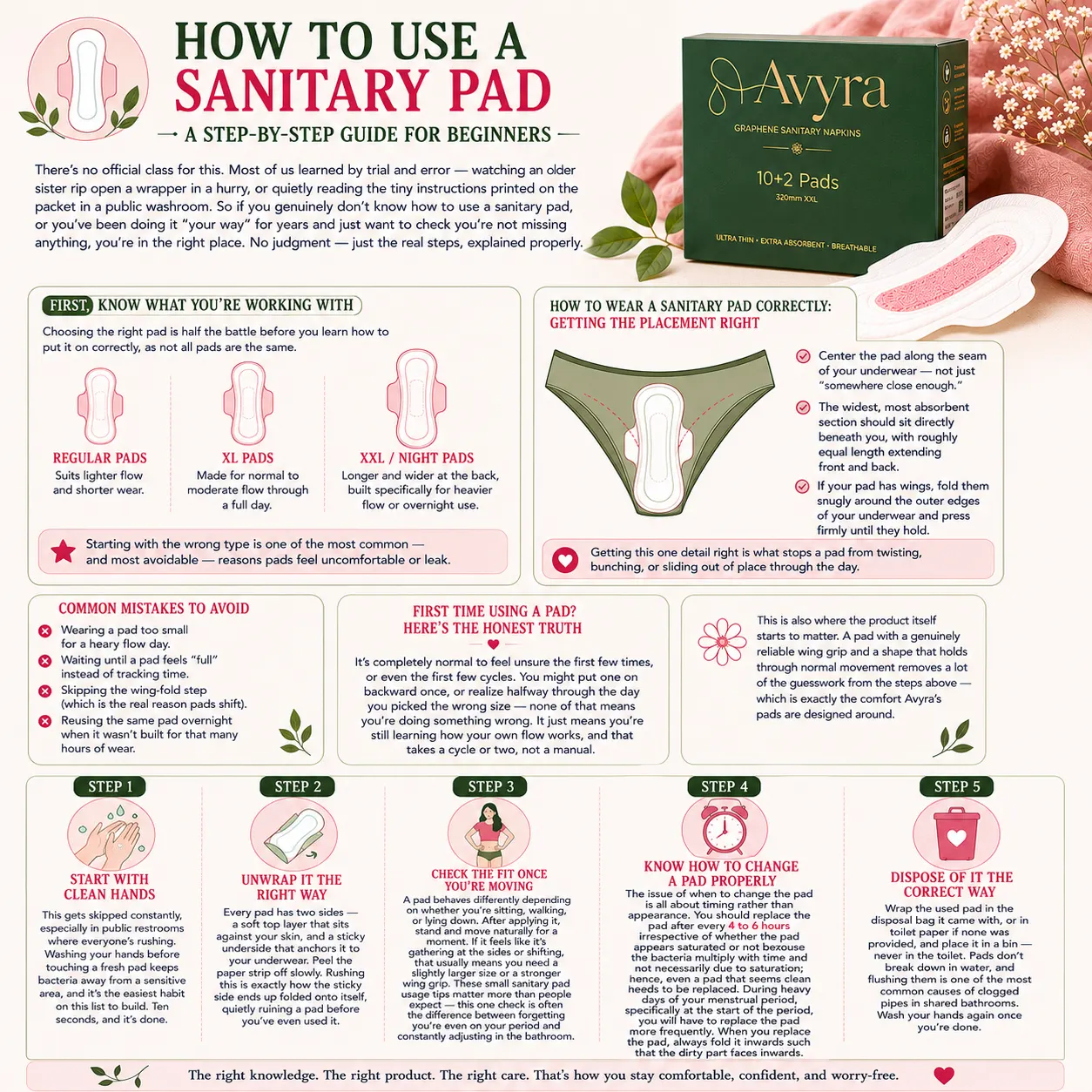
There’s no official class for this. Most of us learned by trial and error — watching an older sister rip open a wrapper in a hurry, or quietly reading the tiny instructions printed on the packet in a public washroom. So if you genuinely don’t know how to use a sanitary pad, or you’ve been doing it “your way” for years and just want to check you’re not missing anything, you’re in the right place. No judgment — just the real steps, explained properly.
- —— HABIT 01 ——
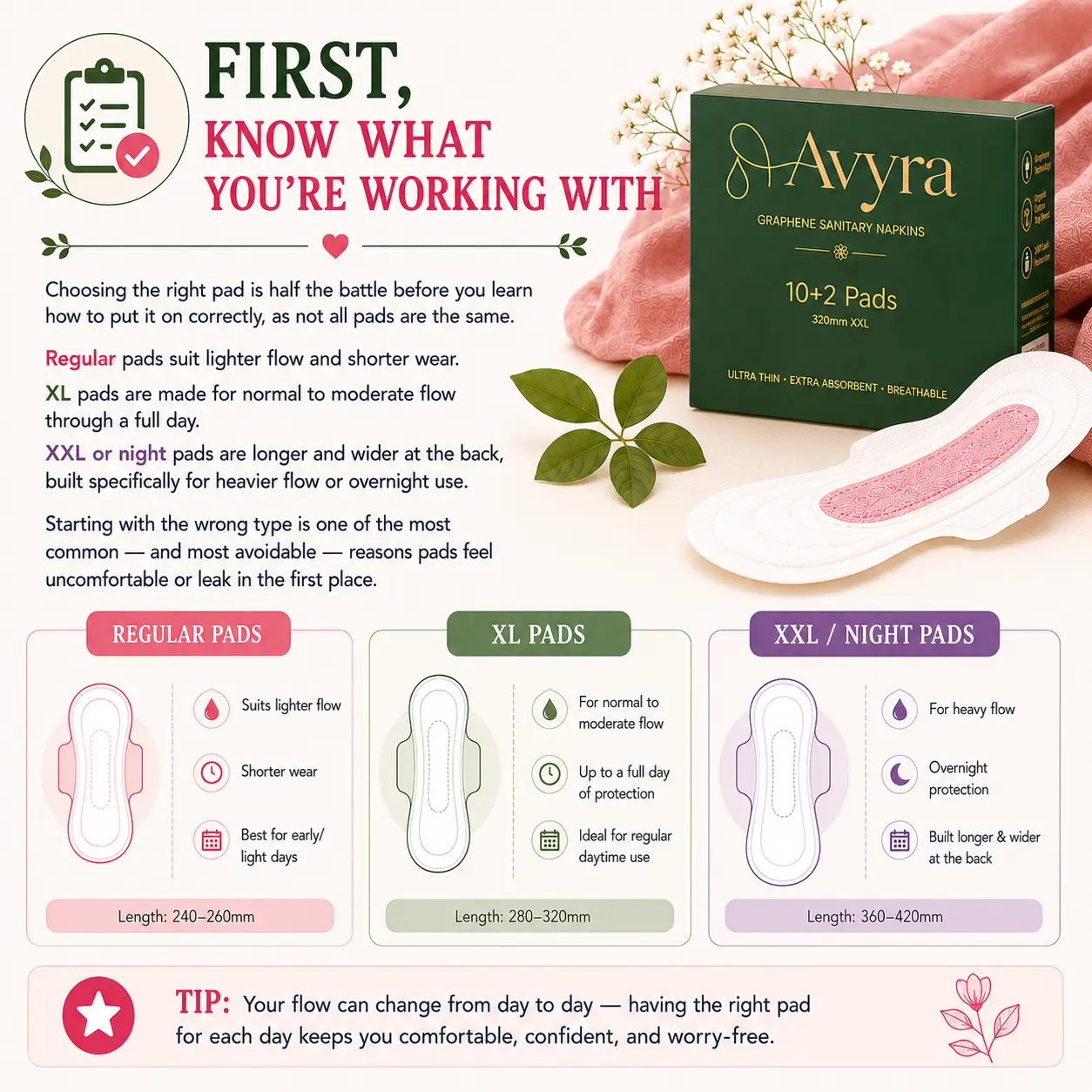
First, Know What You're Working With
- —— HABIT 02 ——
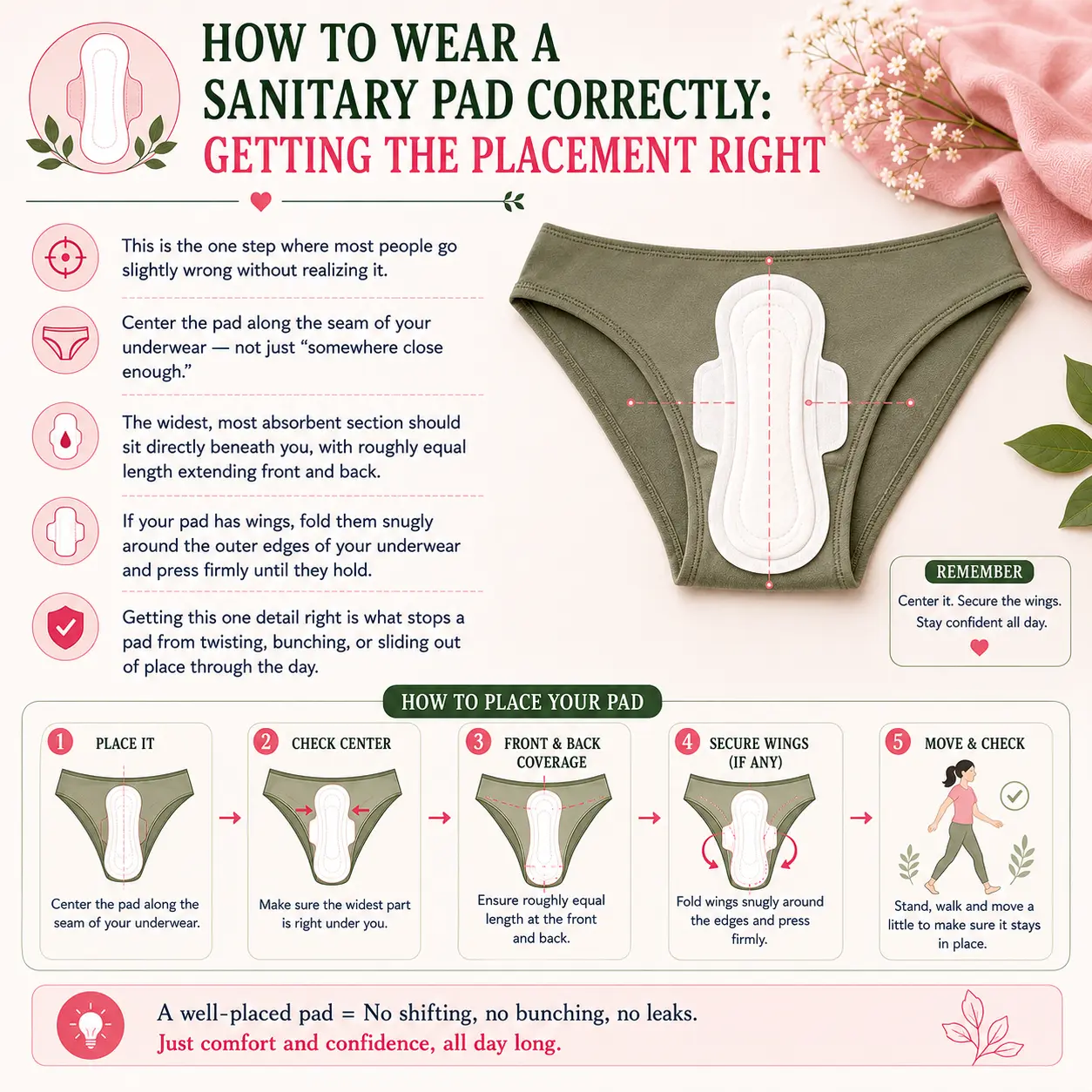
How to Wear a Sanitary Pad Correctly: Getting the Placement Right
- —— HABIT 03 ——
Common Mistakes to Avoid
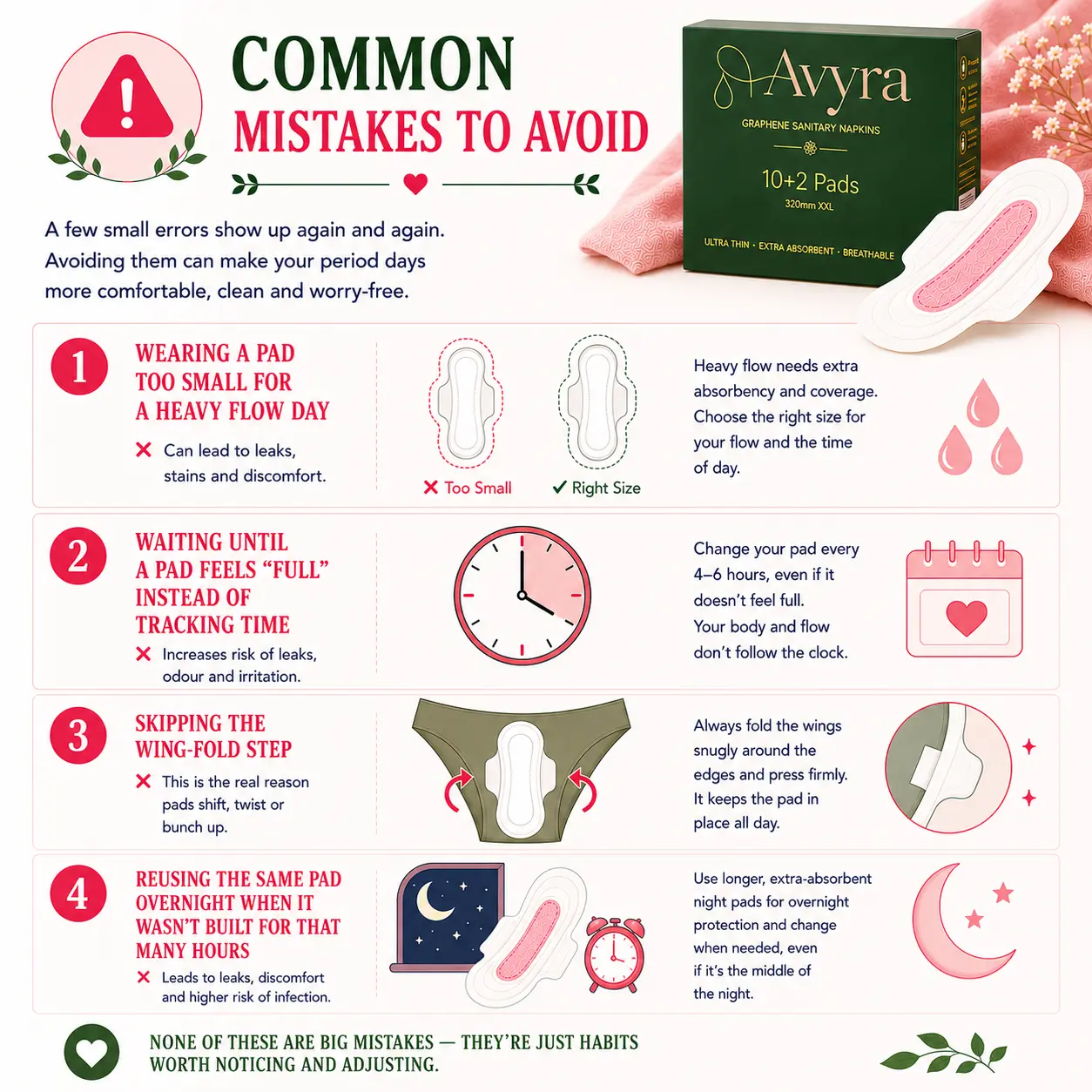
A few small errors show up again and again: wearing a pad too small for a heavy flow day, waiting until a pad feels “full” instead of tracking time, skipping the wing-fold step (which is the real reason pads shift), and reusing the same pad overnight when it wasn’t built for that many hours of wear. None of these are big mistakes — they’re just habits worth noticing and adjusting.
- —— HABIT 04 ——
First Time Using a Pad? Here's the Honest Truth
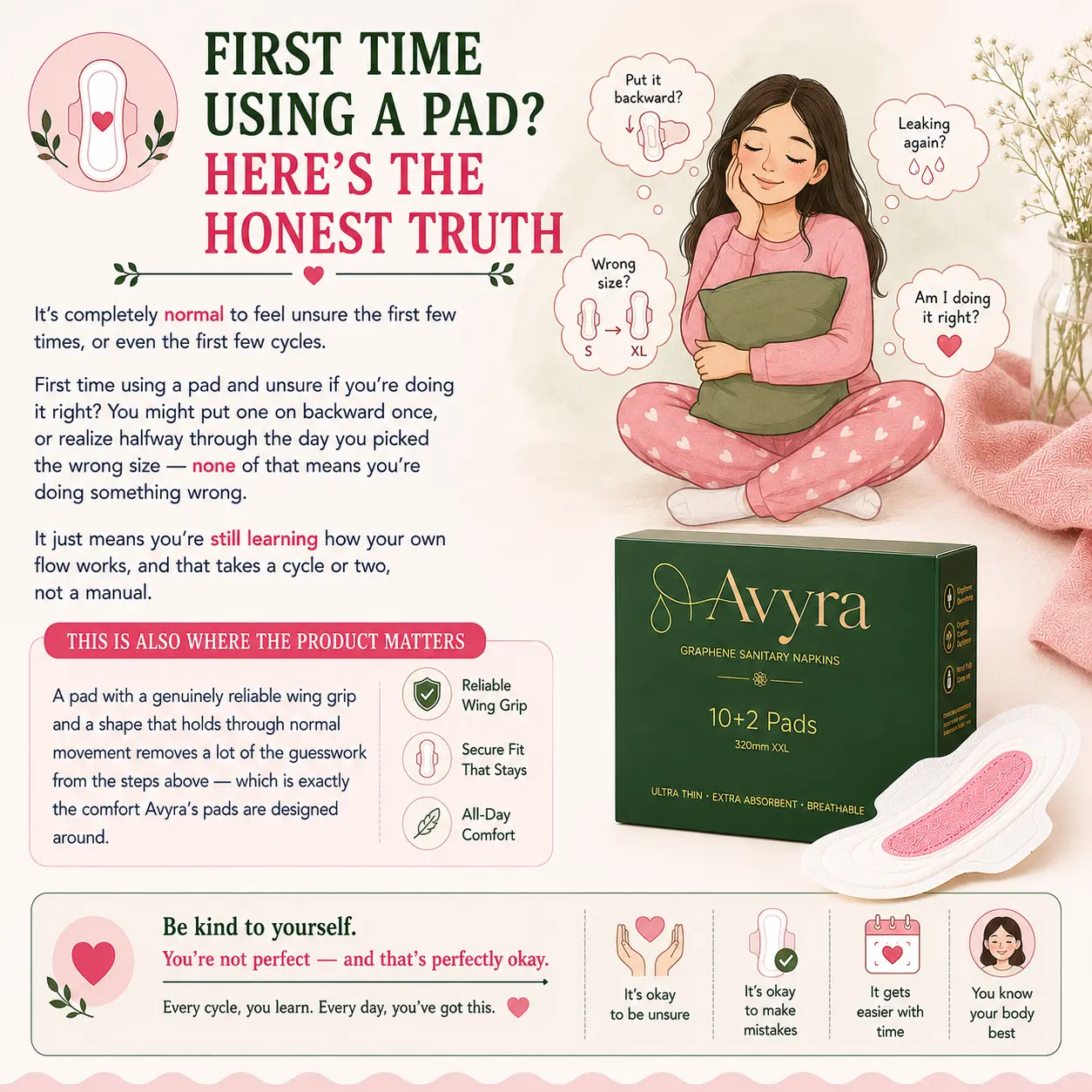
It’s completely normal to feel unsure the first few times, or even the first few cycles. First time using a pad and unsure if you’re doing it right? You might put one on backward once, or realize halfway through the day you picked the wrong size — none of that means you’re doing something wrong. It just means you’re still learning how your own flow works, and that takes a cycle or two, not a manual.
This is also where the product itself starts to matter. A pad with a genuinely reliable wing grip and a shape that holds through normal movement removes a lot of the guesswork from the steps above — which is exactly the comfort Avyra’s pads are designed around.
Step 1: Start With Clean Hands
This gets skipped constantly, especially in public restrooms where everyone's rushing. Washing your hands before touching a fresh pad keeps bacteria away from a sensitive area, and it's the easiest habit on this list to build. Ten seconds, and it's done.
Step 2: Unwrap It the Right Way
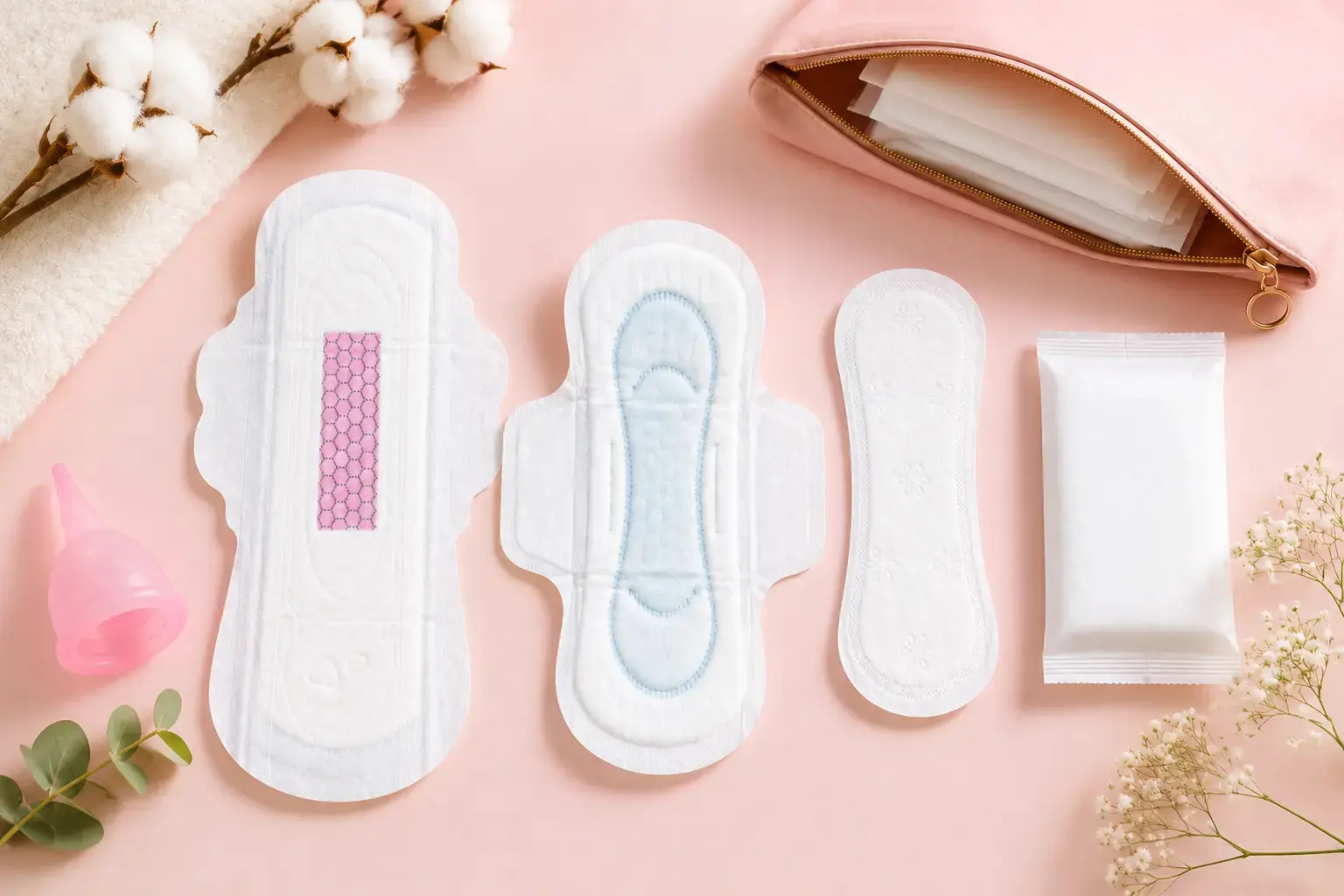
Every pad has two sides — a soft top layer that sits against your skin, and a sticky underside that anchors it to your underwear. Peel the paper strip off slowly. Rushing this is exactly how the sticky side ends up folded onto itself, quietly ruining a pad before you've even used it.
Step 3: Check the Fit Once You're Moving
A pad behaves differently depending on whether you're sitting, walking, or lying down. After applying it, stand and move naturally for a moment. If it feels like it's gathering at the sides or shifting, that usually means you need a slightly larger size or a stronger wing grip. These small sanitary pad usage tips matter more than people expect — this one check is often the difference between forgetting you're even on your period and constantly adjusting in the bathroom.
Step 4: Know How to Change a Pad Properly
The issue of when to change the pad is all about timing rather than appearance. You should replace the pad after every 4 to 6 hours irrespective of whether the pad appears saturated or not because the bacteria multiply with time and not necessarily due to saturation; hence, even a pad that seems clean needs to be replaced. During heavy days of your menstrual period, specifically at the start of the period, you will have to replace the pad more frequently. When you replace the pad, always fold it inwards such that the dirty part faces inwards
Step 5: Dispose of It the Correct Way
Wrap the used pad in the disposal bag it came with, or in toilet paper if none was provided, and place it in a bin — never in the toilet. Pads don't break down in water, and flushing them is one of the most common causes of clogged pipes in shared bathrooms. Wash your hands again once you're done.
- —— FAQ's ——