- —— CARE & AWARENESS
- AVYRA EDITORIAL
How to Choose the Right Sanitary Pad for Your Needs
Sanitary Pad Sizes — Why One Size Never Fits Every Day
Standing in front of a shelf full of sanitary pads, all promising “ultimate protection” and “all-day comfort” can feel oddly overwhelming. Wings or no wings? Cotton or synthetic? XL or XXL? If you’ve ever grabbed a pack just because it was familiar rather than because it actually fit your flow, you’re not alone — most of us never got a proper explanation of how to choose the right sanitary pad; we just figured it out through trial and error and the occasional leak at the worst possible moment.
The good news is that once you grasp a few key factors, selecting the right pad becomes straightforward.
- —— HABIT 01 ——
Sanitary Pad Sizes — Why One Size Never Fits Every Day
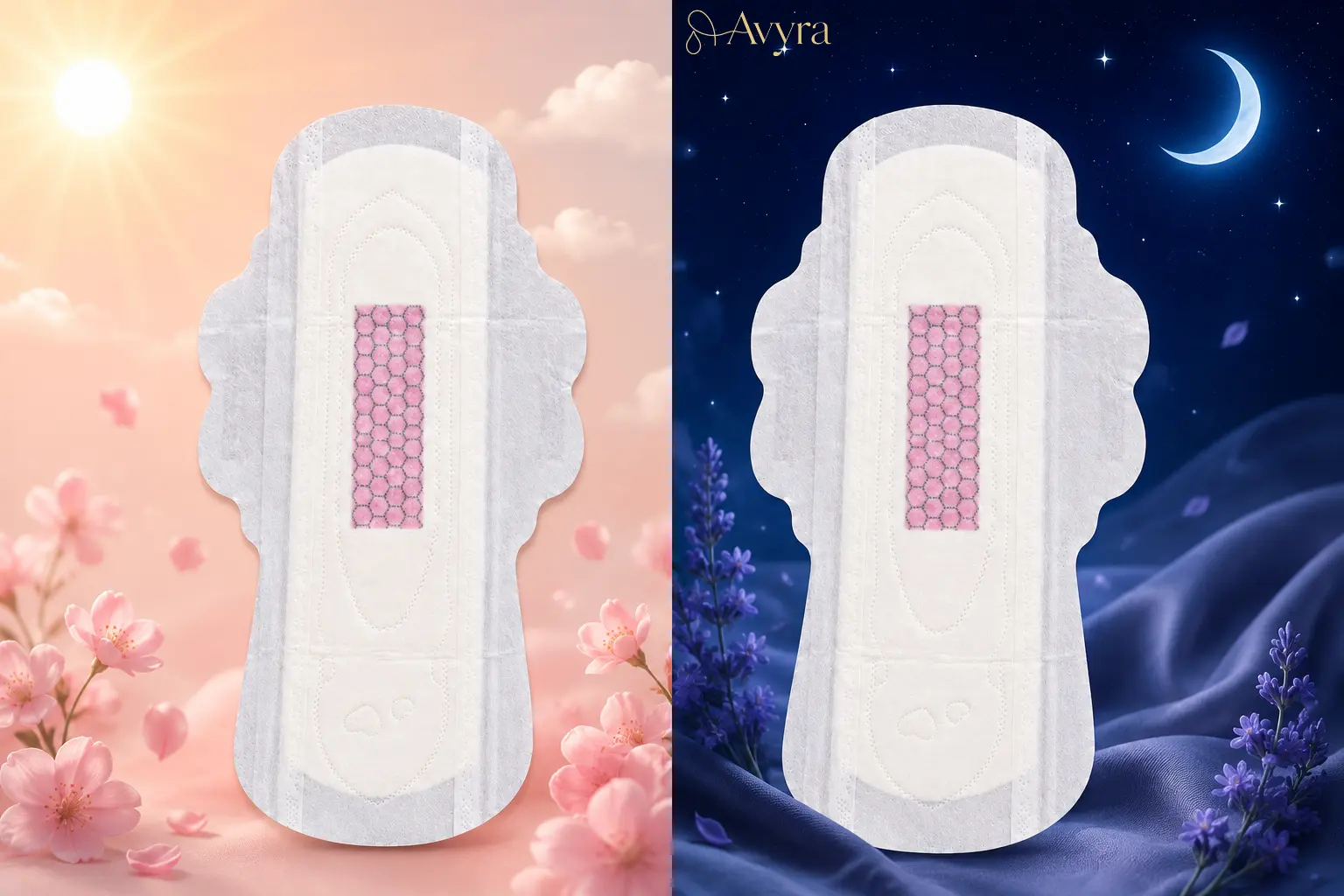
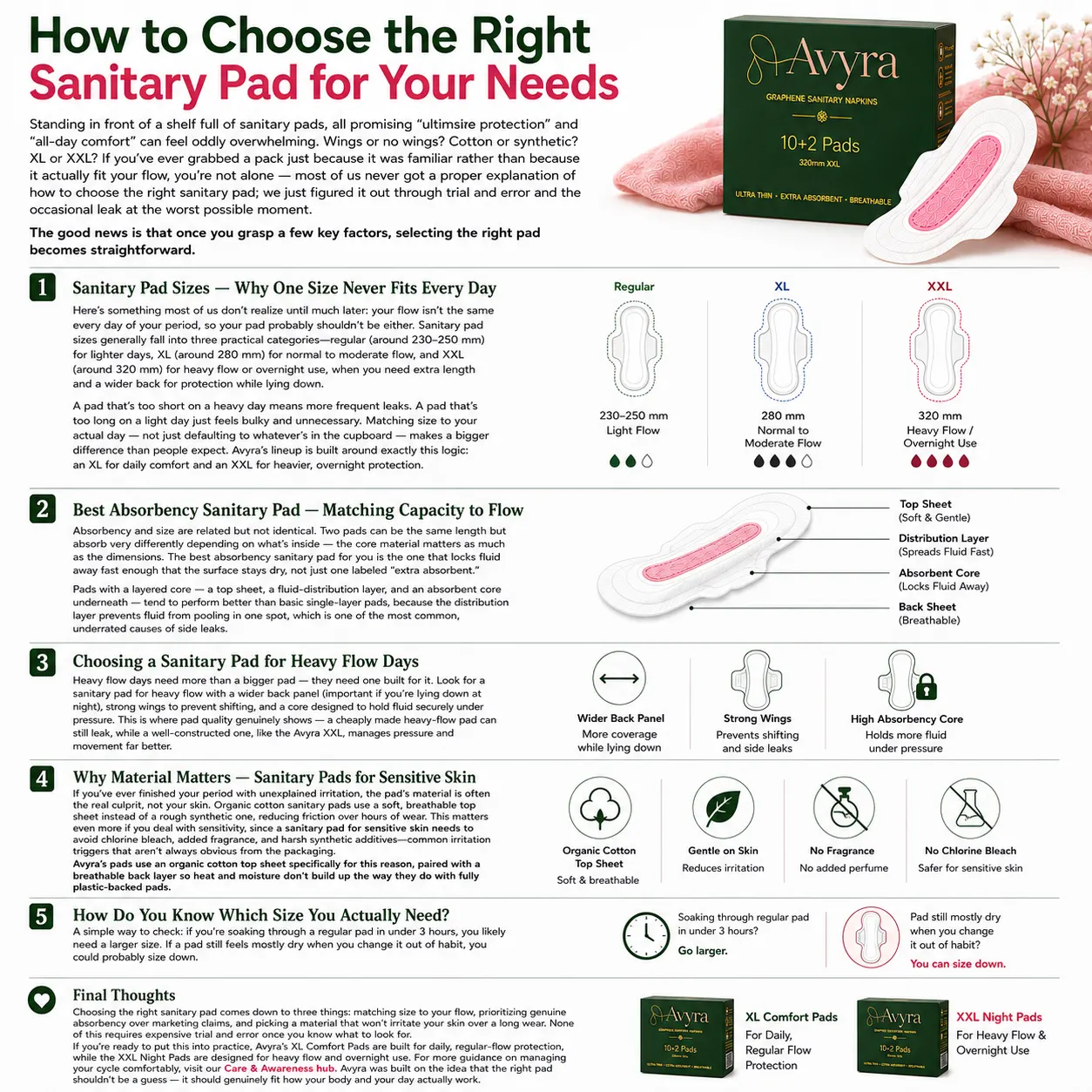
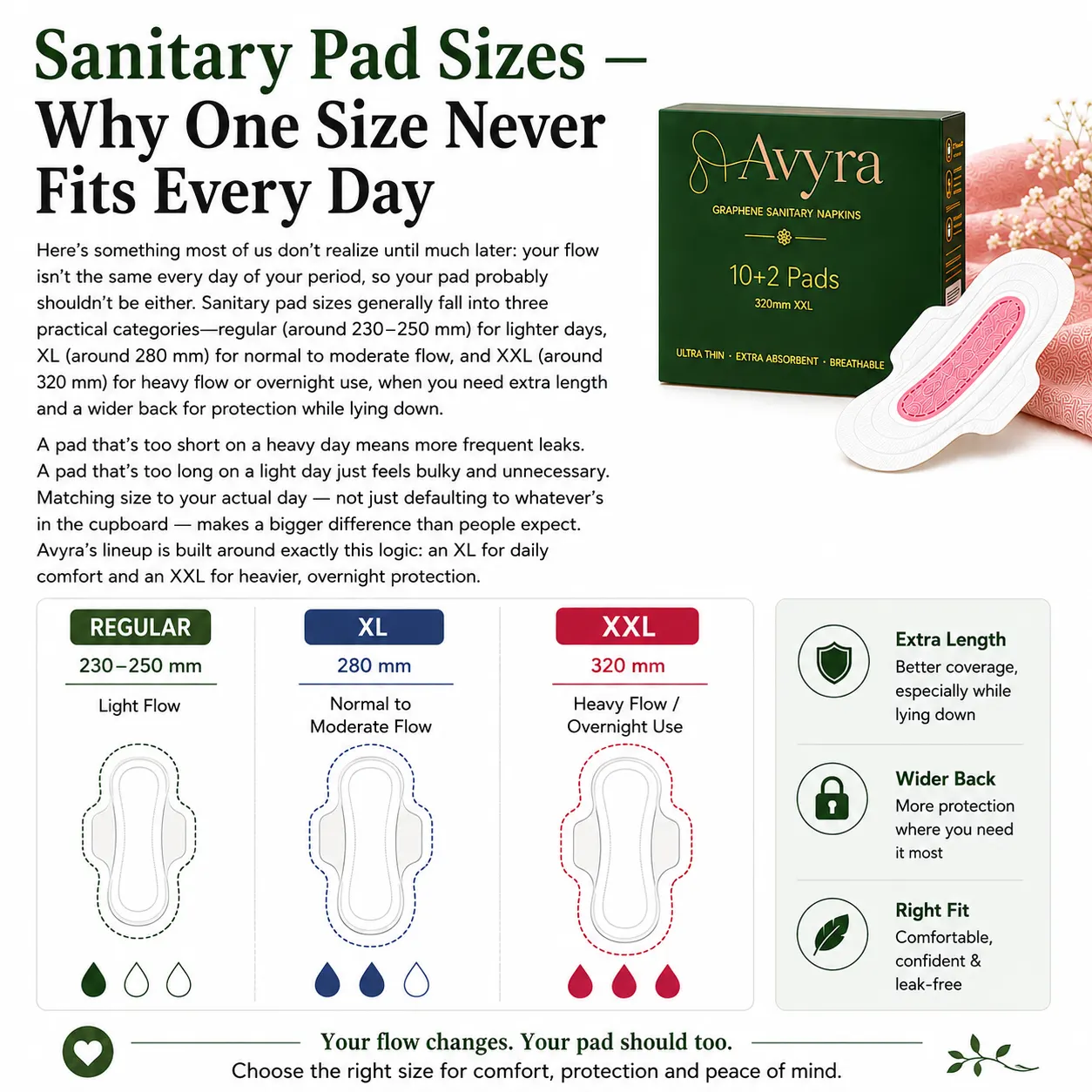
Here’s something most of us don’t realize until much later: your flow isn’t the same every day of your period, so your pad probably shouldn’t be either. Sanitary pad sizes generally fall into three practical categories—regular (around 230–250 mm) for lighter days, XL (around 280 mm) for normal to moderate flow, and XXL (around 320 mm) for heavy flow or overnight use, when you need extra length and a wider back for protection while lying down. A pad that’s too short on a heavy day means more frequent leaks. A pad that’s too long on a light day just feels bulky and unnecessary. Matching size to your actual day — not just defaulting to whatever’s in the cupboard — makes a bigger difference than people expect. Avyra’s lineup is built around exactly this logic: an XL for daily comfort and an XXL for heavier, overnight protection.
- —— HABIT 02 ——
Best Absorbency Sanitary Pad — Matching Capacity to Flow
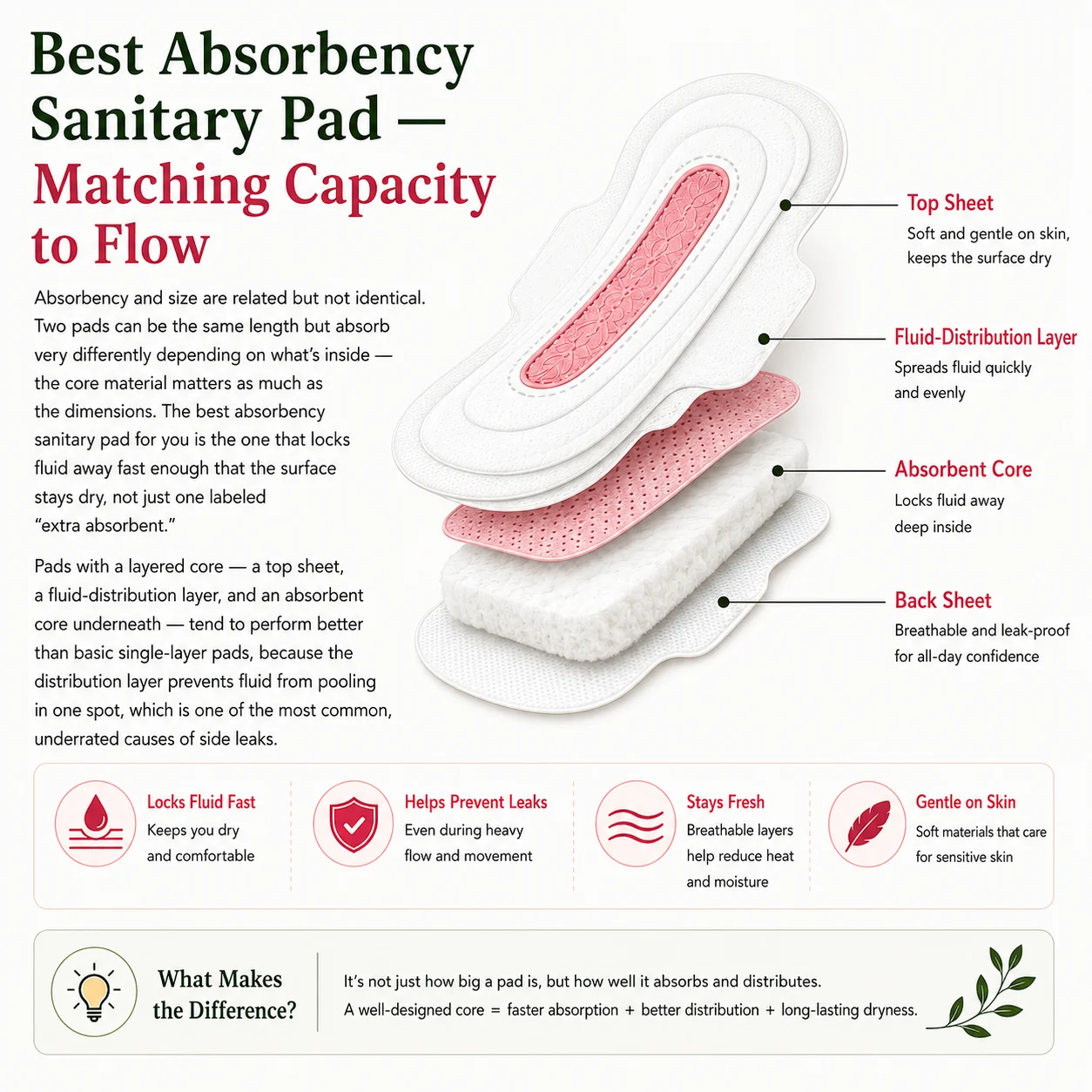
Absorbency and size are related but not identical. Two pads can be the same length but absorb very differently depending on what’s inside — the core material matters as much as the dimensions. The best absorbency sanitary pad for you is the one that locks fluid away fast enough that the surface stays dry, not just one labeled “extra absorbent.” Pads with a layered core — a top sheet, a fluid-distribution layer, and an absorbent core underneath — tend to perform better than basic single-layer pads, because the distribution layer prevents fluid from pooling in one spot, which is one of the most common, underrated causes of side leaks.
- —— HABIT 03 ——
Choosing a Sanitary Pad for Heavy Flow Days
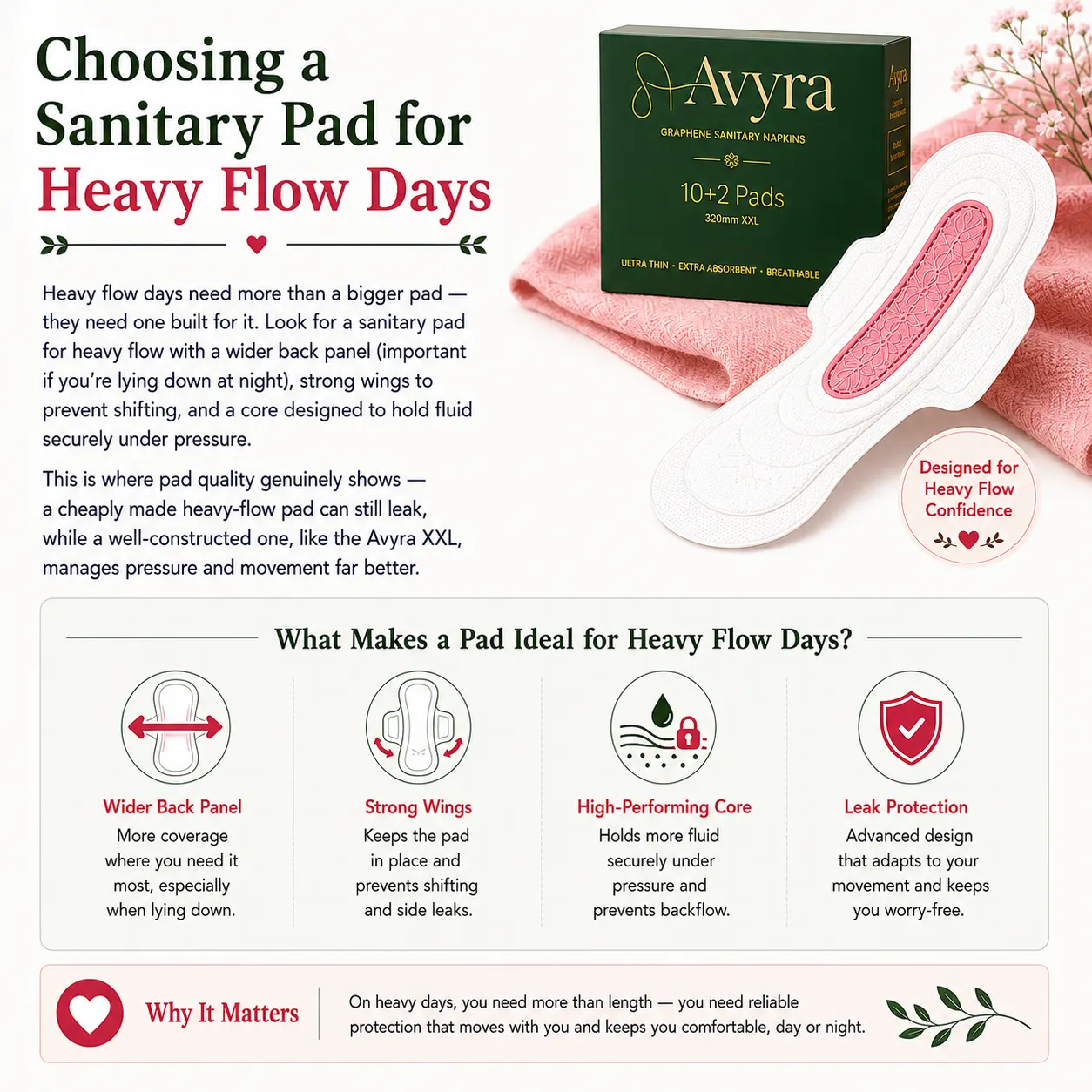
Heavy flow days need more than a bigger pad — they need one built for it. Look for a sanitary pad for heavy flow with a wider back panel (important if you’re lying down at night), strong wings to prevent shifting, and a core designed to hold fluid securely under pressure. This is where pad quality genuinely shows — a cheaply made heavy-flow pad can still leak, while a well-constructed one, like the Avyra XXL, manages pressure and movement far better.
- —— HABIT 04 ——
Why Material Matters — Sanitary Pads for Sensitive Skin
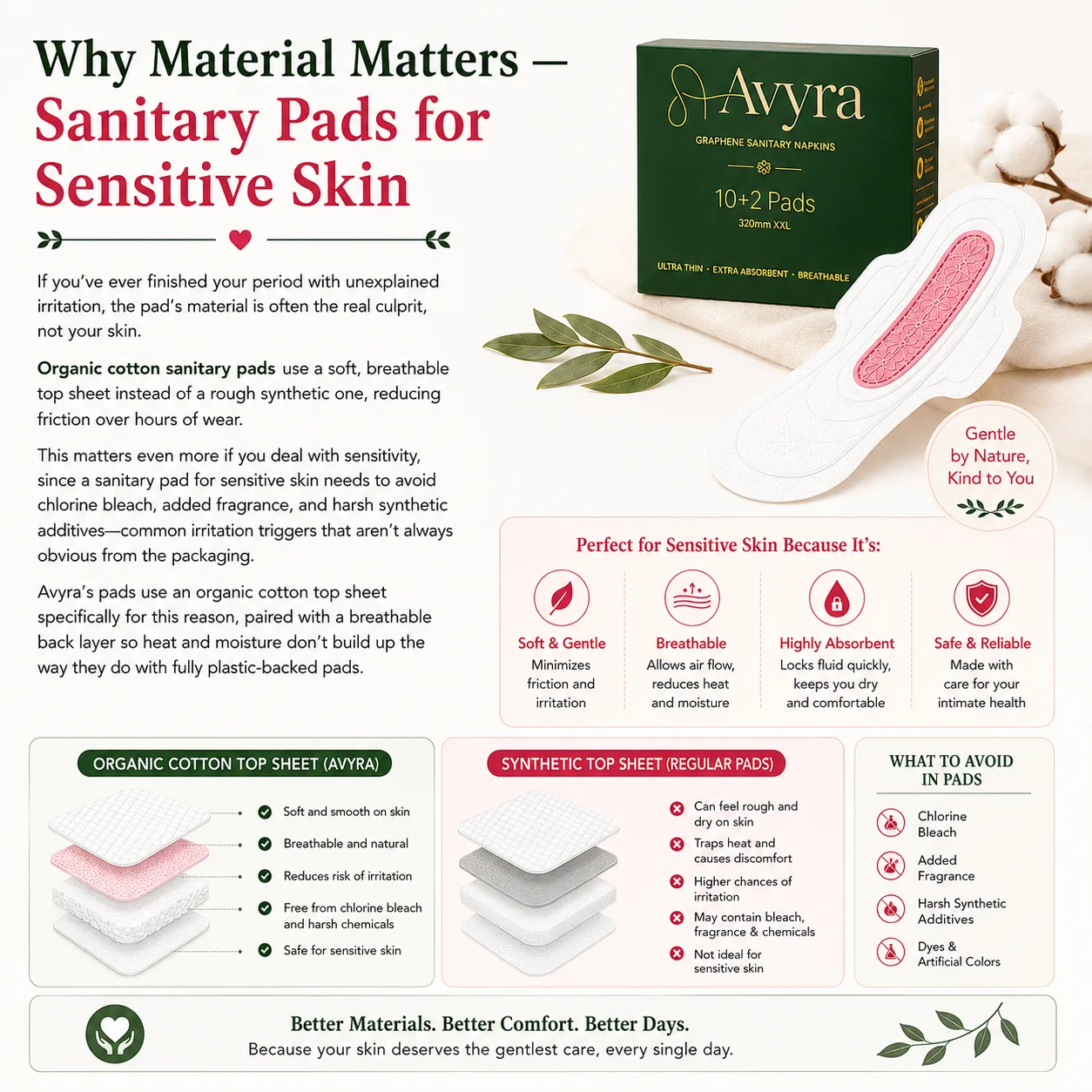
If you’ve ever finished your period with unexplained irritation, the pad’s material is often the real culprit, not your skin. Organic cotton sanitary pads use a soft, breathable top sheet instead of a rough synthetic one, reducing friction over hours of wear. This matters even more if you deal with sensitivity, since a sanitary pad for sensitive skin needs to avoid chlorine bleach, added fragrance, and harsh synthetic additives—common irritation triggers that aren’t always obvious from the packaging.
Avyra’s pads use an organic cotton top sheet specifically for this reason, paired with a breathable back layer so heat and moisture don’t build up the way they do with fully plastic-backed pads.
How Do You Know Which
Size You Actually Need?
A simple way to check: if you're soaking through a regular pad in under 3 hours, you likely need a larger size. If a pad still feels mostly dry when you change it out of habit, you could probably size down.
- —— IN CLOSING ——
Final Thoughts
Choosing the right sanitary pad comes down to three things: matching size to your flow, prioritizing genuine absorbency over marketing claims, and picking a material that won’t irritate your skin over a long wear. None of this requires expensive trial and error once you know what to look for.
If you’re ready to put this into practice, Avyra’s XL Comfort Pads are built for daily, regular-flow protection, while the XXL Night Pads are designed for heavy flow and overnight use. For more guidance on managing your cycle comfortably, visit our Care & Awareness hub. Avyra was built on the idea that the right pad shouldn’t be a guess — it should genuinely fit how your body and your day actually work.
- —— FAQ's ——