- —— CARE & AWARENESS
- AVYRA EDITORIAL
When to the Avoid Using Menstrual Cups
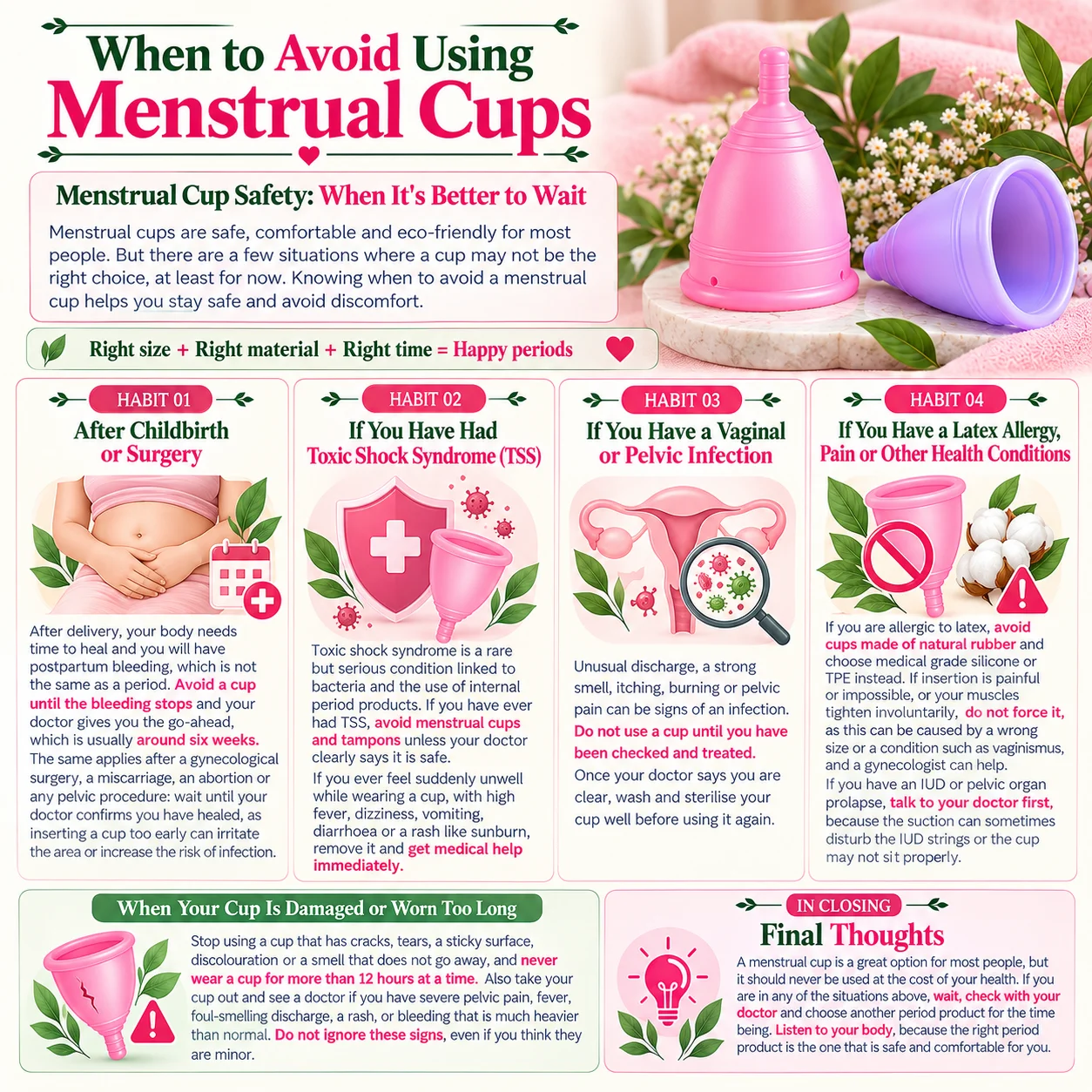
Menstrual Cup Safety: When It's Better to Wait
Menstrual cups are safe, comfortable and eco-friendly for most people. But there are a few situations where a cup may not be the right choice, at least for now. Knowing when to avoid a menstrual cup helps you stay safe and avoid discomfort.
Right size + Right material + Right time = Happy periods
- —— HABIT 01 ——
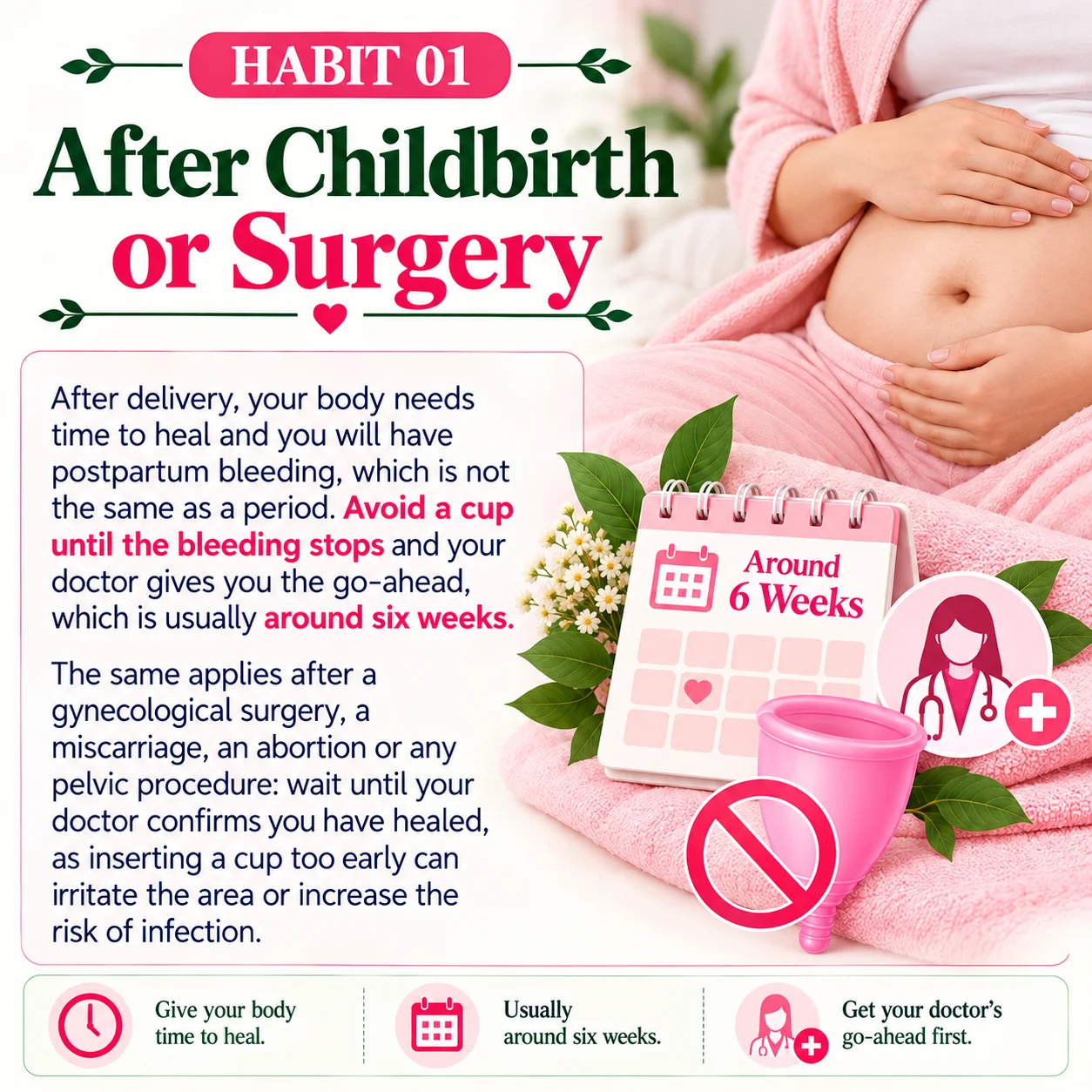
After Childbirth or Surgery
- —— HABIT 02 ——
If You Have Had Toxic Shock Syndrome (TSS)
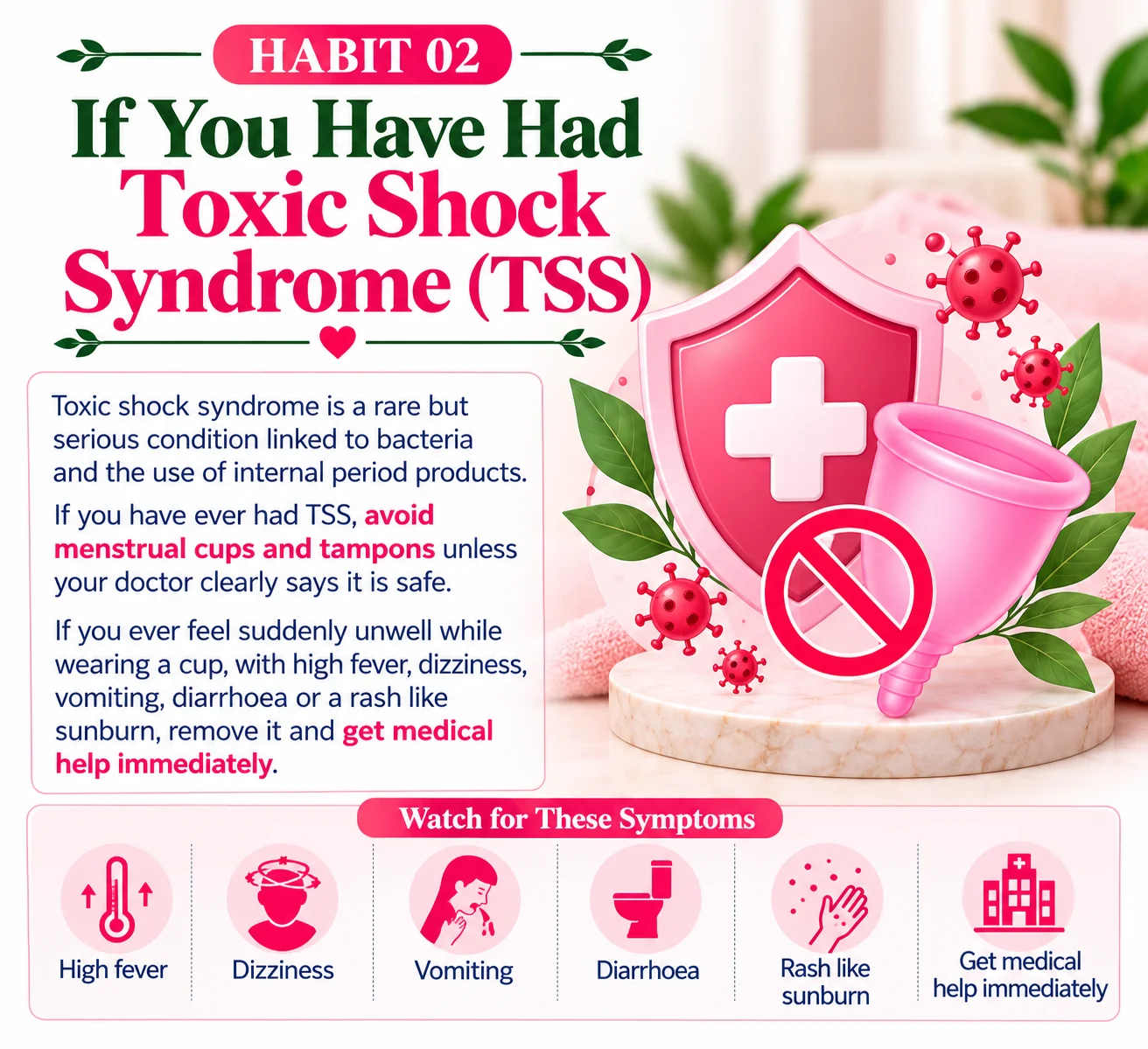
Toxic shock syndrome is a rare but serious condition linked to bacteria and the use of internal period products. If you have ever had TSS, avoid menstrual cups and tampons unless your doctor clearly says it is safe. If you ever feel suddenly unwell while wearing a cup, with high fever, dizziness, vomiting, diarrhoea or a rash like sunburn, remove it and get medical help immediately.
- —— HABIT 03 ——
If You Have a Vaginal or Pelvic Infection
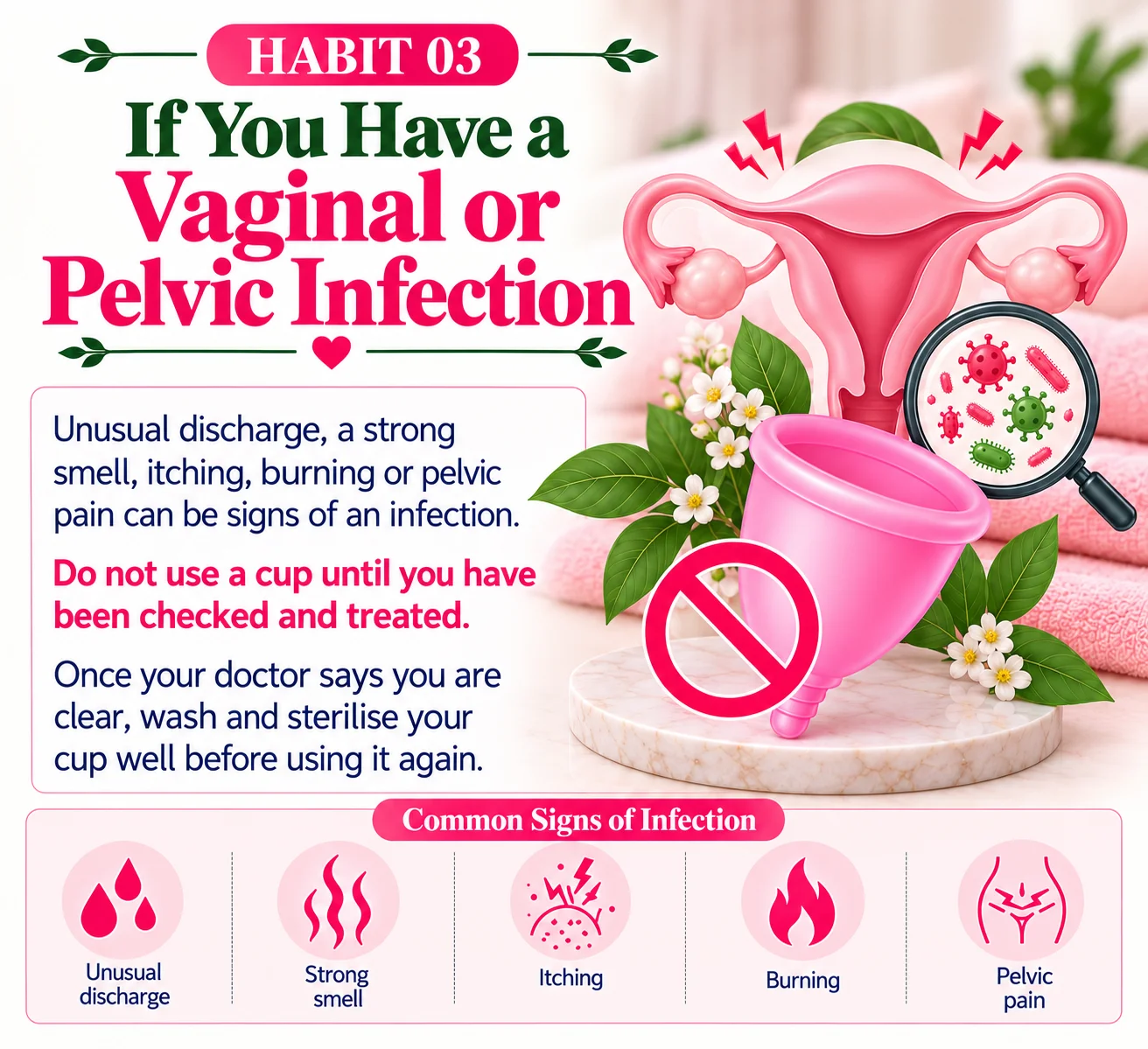
Unusual discharge, a strong smell, itching, burning or pelvic pain can be signs of an infection. Do not use a cup until you have been checked and treated. Once your doctor says you are clear, wash and sterilise your cup well before using it again.
- —— HABIT 04 ——
If You Have a Latex Allergy, Pain or Other Health Conditions
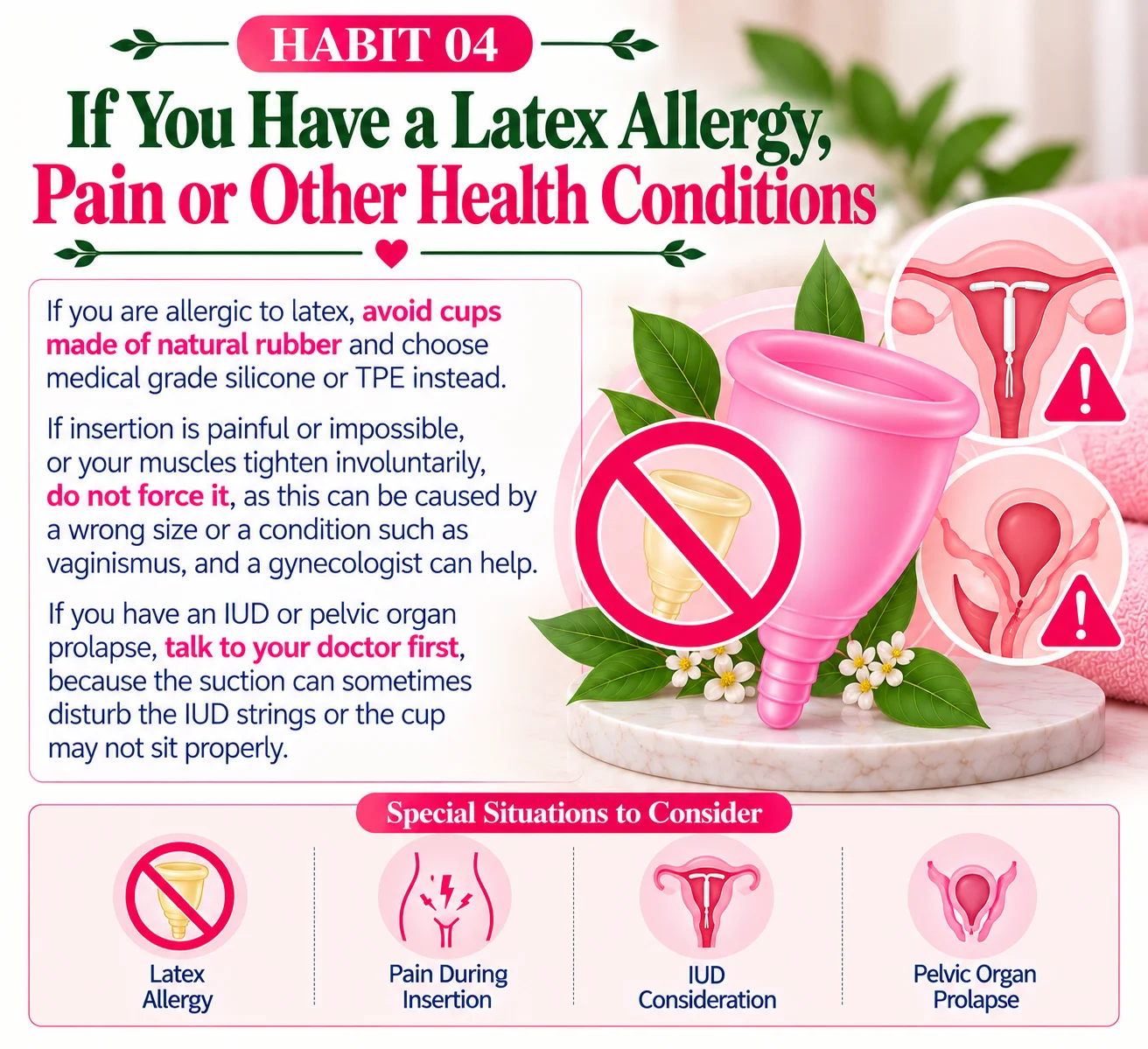
If you are allergic to latex, avoid cups made of natural rubber and choose medical grade silicone or TPE instead. If insertion is painful or impossible, or your muscles tighten involuntarily, do not force it, as this can be caused by a wrong size or a condition such as vaginismus, and a gynecologist can help. If you have an IUD or pelvic organ prolapse, talk to your doctor first, because the suction can sometimes disturb the IUD strings or the cup may not sit properly.
When Your Cup Is Damaged
or Worn Too Long
Stop using a cup that has cracks, tears, a sticky surface, discolouration or a smell that does not go away, and never wear a cup for more than 12 hours at a time. Also take your cup out and see a doctor if you have severe pelvic pain, fever, foul-smelling discharge, a rash, or bleeding that is much heavier than normal. Do not ignore these signs, even if you think they are minor.
- —— IN CLOSING ——
Final Thoughts
A menstrual cup is a great option for most people, but it should never be used at the cost of your health. If you are in any of the situations above, wait, check with your doctor and choose another period product for the time being. Listen to your body, because the right period product is the one that is safe and comfortable for you.
- —— FAQ's ——
Frequently Asked Questions
Can I use a menstrual cup after childbirth?
You should wait until your postpartum bleeding has stopped and your doctor says it is safe, which is usually around six weeks after delivery.
Can I use a menstrual cup with an IUD?
Many people can, but it is best to check with your doctor first. Always break the seal before removing the cup so the IUD strings are not pulled.
Can I sleep with a menstrual cup?
Yes, as long as you stay within the time limit recommended by your brand, which is usually up to 8 to 12 hours. Empty it before bed and as soon as you wake up.
How do I know a menstrual cup is not right for me?
If you have constant pain, repeated leakage even after trying different sizes, or any signs of irritation or infection, a cup may not suit you right now. Speak to a doctor and use another period product in the meantime.